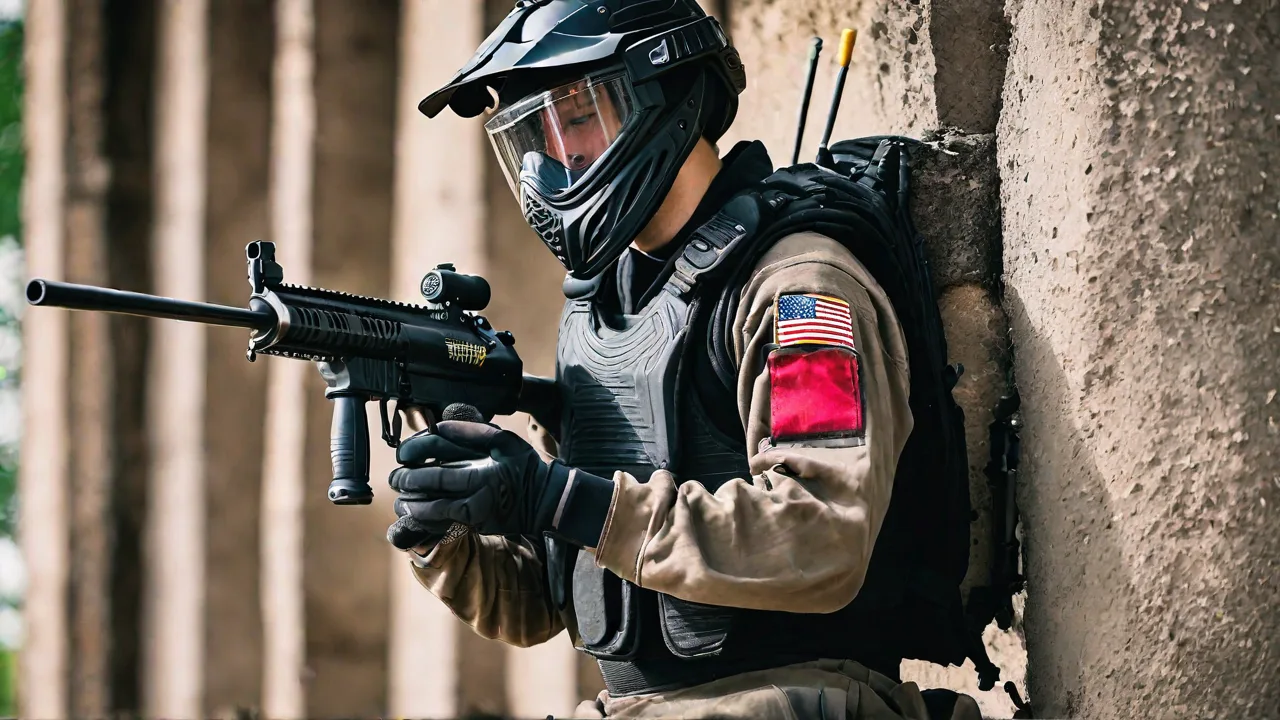
How to Handle Common Paintball Equipment Malfunctions Quickly
Paintball is a game of speed, strategy, and peak physical performance. Few things break concentration like the sudden hiss of an air leak or the frustrating silence of a hopper that has stopped feeding. While equipment malfunctions are an inevitable part of the sport, a prepared player can diagnose and resolve these issues in seconds, turning a potential loss of position into a minor delay. This guide provides a field-tested framework for handling the most common mechanical failures, ensuring you spend less time fixing your gear and more time dominating the field. From air system diagnostics to bolt assembly repairs, mastering these skills is an essential part of player development at every level.
The difference between winning and losing a point often comes down to a player's ability to recover from a mechanical failure without panic. A player who knows their marker inside and out will instinctively reach for the right tool or perform the correct adjustment in seconds. This guide breaks down the most frequent paintball equipment malfunctions, offering specific, actionable steps to get you back in the game quickly. We will cover everything from hopper jams and air leaks to barrel blockages and bolt stick, ensuring you have the knowledge to handle any situation.
Mastering Hopper and Loader Troubleshooting
The loader, or hopper, is the most common source of malfunctions on the paintball field. A jammed hopper effectively turns your high-end electro-pneumatic marker into an expensive single-shot pistol. Understanding the specific failure modes of your loader is the first step toward a quick fix. Loaders generally fall into three categories: gravity feed, agitated feed, and force-feed. Each has unique mechanical vulnerabilities.
Understanding Your Loader System
Gravity feed hoppers rely entirely on gravity and the motion of the marker to feed paint. They are simple but prone to jams when paint is slightly tacky, swollen, or when the shells are deformed. Cheap, old, or low-quality paint is the primary culprit. Agitated loaders use a motor-driven paddle to stir the paint, preventing bridging. These are more reliable than basic gravity hoppers but can jam if the paddle mechanism is damaged or if a paintball breaks inside the shell. Force-feed loaders, such as the DYE Rotor or Virtue Spire, use a drive cone or belt system to actively push paint into the feed neck. While highly reliable, they introduce failure points like eye jams, battery drain, and stripped drive gears. Knowing which type you have dictates your troubleshooting approach.
Rapid On-Field Hopper Clearance
When your hopper stops feeding mid-game, the fastest fix is often a mechanical dislodging of the jam. For a gravity hopper, simply remove it from the marker, cover the feed neck, and shake it vigorously. This usually breaks up any bridging. For electronic loaders, a firm tap with the palm of your hand on the side of the shell, near the drive mechanism, can often clear a minor jam. If that fails, disconnect the hopper and inspect the drive cone or agitator for visible obstructions. A broken paintball inside the hopper shell will cause immediate and repeated jams. You must remove the shell, clean the paint out of the drive mechanism, and wipe down the interior. Carrying a small bottle of water or a damp cloth in your gear bag is vital for cleaning paint out of loader internals.
Electronic Loader Diagnosis
If your loader is not turning on or is running slowly, the issue is almost always electrical. Battery problems are the most common. Always check battery polarity and connection tightness first. Many loaders have battery packs that can vibrate loose during hard slides or dives. Carry replacement batteries in your pod pack or gear bag. Eye jams occur in loaders that use a break-beam sensor to control feed rate. If the eyes are dirty or blocked by paint residue, the loader may stop feeding entirely. Clean the eye window or eye pipe with a cotton swab and a small amount of water. Drive train failures, such as stripped gears or broken axles, require spare parts. If you are an avid tournament player, keeping a spare drive cone or gear set is a wise investment.
Diagnosing and Fixing Air System Leaks
An air leak is the most immediate and debilitating equipment malfunction. It robs your marker of the propellant needed to fire and can indicate a serious mechanical issue. Air leaks generally occur at one of four points: the tank connection (ASA), the macroline or hose, the regulator, or the valve/solenoid. Learning to quickly locate the source of a leak by sound and by feel is an essential field skill.
The Sound of the Problem
A leak at the tank connection usually sounds like a constant, rushing hiss at the back of the marker. This is often caused by a worn or missing O-ring on the tank's inlet nipple. Replacing this O-ring is the simplest fix in paintball. Keep a handful of #006 or #010 Buna-N O-rings in your toolkit. If the hiss is coming from the macroline or hose fittings, it will sound slightly higher pitched and more focused. Check for kinked or split macroline. A loose compression fitting can often be fixed by tightening the collar, but a damaged line must be replaced. A leak from the regulator will manifest as a consistent hiss from the front grip or foregrip area. This is often a symptom of a damaged regulator seat or a dirty piston. Valve and solenoid leaks sound internal and often happen when the marker is gassed up but not fired. These are more complex and will require careful disassembly and O-ring replacement.
ASA and Tank Connection Leaks
The Air Source Adapter (ASA) is the interface between your marker and your air tank. A leak here is common and almost always fixable in seconds. First, remove the tank and inspect the tank O-ring. If it is flat, cracked, or missing, replace it. Lightly lubricate the new O-ring with silicone grease or oil. Reattach the tank and tighten it fully. If the leak persists, inspect the pin valve on the tank. This small pin can become stuck or damaged, preventing a proper seal. You can carefully adjust the pin with a small Allen key or screwdriver. Leaks can also occur at the ASA's macroline fitting. Ensure the fitting is tight and the macroline is fully inserted. If the leak is at the ASA's output where the macroline connects, check for debris or damage to the fitting's sealing surface.
Macroline and Fitting Leaks
Macroline, the high-pressure hose connecting the ASA to the regulator or body, is prone to leaks, especially in cold weather or after significant use. A kinked or split macroline will hiss loudly and must be replaced immediately. To replace macroline, you need a sharp knife or side cutters and a new piece of line. Cut the line square to ensure a proper seal. Push it firmly into the fitting until it stops, then pull back gently to confirm it is locked. Never use Teflon tape on macroline fittings; it can crack the plastic collars and cause leaks. For hard-line setups or braided hoses, check for fraying or corrosion at the connection points.
Regulator Creep and Failure
Regulator creep occurs when the regulator's valve seat is worn or dirty, allowing high-pressure air to bleed past and slowly increase the output pressure. This causes the marker's velocity to climb over time, leading to accuracy loss and potential barrel breaks. You can detect creep by gassing up your marker, waiting 30 seconds, and then shooting. If the first few shots are significantly faster or slower than expected, your regulator is likely creeping. To fix this, you must disassemble the regulator and clean the piston and valve seat. Rebuild kits for popular regulators (like the CP, Bob Long, or Powerhouse) are inexpensive and easy to install. Regular cleaning of the regulator is a key part of preventative maintenance.
Internal Valve and Solenoid Issues
For electro-pneumatic markers, the solenoid is a common failure point. A solenoid leak often sounds like a rapid, pulsing hiss or a steady leak from the grip frame. Solenoids are sensitive to over-lubrication and silicone oils. If you introduce too much oil into your air system, it can clog the solenoid's tiny internal passages. A leaking solenoid usually requires replacement, which is a moderate repair job. For mechanical markers, such as the Tippmann 98 or Autococker, leaks occur at the valve. Replacing the valve stem and cup seal is a standard rebuild procedure. These parts wear out over time, so keeping a valve rebuild kit in your gear bag is recommended.
Barrel Obstructions and Paint Breakage
A blocked barrel is a catastrophic failure that usually results from a paintball breaking inside the bore. This creates a messy slurry that must be cleaned immediately. Shooting through a barrel break can force paint into the marker's breech, damaging the bolt, eyes, and detents. Proper barrel clearing is a fundamental skill.
The Dreaded Barrel Break
A barrel break happens when the paintball is too fragile for the force applied to it, or when the bore is too tight. Detent failure is a leading cause; if the detents do not hold the ball in place, it can roll forward into the barrel before firing, causing a break. Low-quality paint, cold weather, and high velocity all contribute to barrel breaks. The first sign is a puff of paint exiting the barrel, followed by a weak, sputtering shot. You must stop playing immediately and clear the barrel.
On-Field Barrel Clearing
When you experience a barrel break, the first step is to ensure the marker is safe: engage the safety, remove the air tank, and lock the bolt back. Next, remove the barrel from the marker. Use a squeegee or a barrel swab to push the paint and debris out of the bore. A squeegee is preferred because it has a rubber tip that conforms to the bore, pushing out most of the liquid paint. Follow the squeegee with a dry microfiber cloth or a barrel swab to absorb any remaining moisture. Ensure the barrel is completely dry and free of debris before reattaching it to the marker. Never fire a marker with a blocked barrel; it can cause significant damage to the internal components.
Bore Matching and Rollouts
The opposite of a barrel break is a rollout, where the paintball is too small for the barrel and rolls out of the front before you fire. Rollouts cause a major gas efficiency loss and inaccurate shots. Bore matching is the practice of using a barrel kit to size your barrel to your paint. Common bore sizes range from .682 to .689 for .68 caliber paint. If you experience frequent rollouts, consider using a larger barrel or an internal bore kit like the Freak system. This not only prevents rollouts but also improves accuracy and efficiency. Cleaning and maintaining your barrel kit's inserts is also important; paint residue inside the back of the insert can cause barrel breaks.
Bolt Assembly and Marker Internals
The bolt assembly is the heart of your marker. It cycles back and forth to chamber paintballs and release air. When the bolt malfunctions, the entire marker stops working. Two of the most common bolt-related issues are bolt stick and short stroking.
Bolt Stick: The Silent Game Killer
Bolt stick occurs when the bolt gets stuck in the forward or rearward position. It is often caused by over-lubrication in cold weather, where the grease thickens and becomes tacky. It can also be caused by a damaged or oversized O-ring on the bolt, which creates too much friction. If your bolt is stuck forward, the marker will not fire and may leak air out of the barrel. To fix bolt stick, manually retract the bolt using the cocking rod or handle. If it is extremely stiff, you may need to apply heat (warm up the marker with your hands) to reduce the viscosity of the grease. The best fix is to clean the bolt and replace the bolt O-rings with the correct size, using a thin layer of proper lubricant. Foring the bolt with sandpaper or too much grease is a common mistake.
Short Stroking and Cycling Issues
Short stroking occurs when the bolt does not travel its full distance during the cycle. This prevents the marker from chambering a new paintball or sealing properly, leading to misfires and air leaks. Short stroking is often caused by a low battery in electronic markers. The solenoid needs full voltage to operate the valve correctly. Check your battery first. For mechanical markers, short stroking can be caused by a weak mainspring or a sticky valve. Adjusting the velocity can sometimes solve the issue, but a full valve and bolt rebuild is often necessary. Cleaning the powervalve and replacing the mainspring will restore proper cycling.
O-Ring Replacement 101
The most important maintenance skill in paintball is replacing O-rings. An O-ring kit for your specific marker is an essential investment. O-rings are measured by their inside diameter and cross-section (dash numbers). Common sizes for paintball markers are #006, #008, #010, #014, and #018. When replacing O-rings, use a hook pick to remove the old O-ring without scratching the metal groove. Lubricate the new O-ring with the correct lubricant: silicone oil for the bolt and valve, and Dow 33 grease for the regulator and ASA. Never use petroleum-based lubricants (WD-40, motor oil) as they will destroy the rubber O-rings. Replace all O-rings in the bolt and valve at least once a year, or more frequently if you play regularly. A properly sealed marker is a reliable marker.
Preventative Maintenance: The Pro's Secret Weapon
The best way to handle a malfunction is to prevent it from happening in the first place. A consistent maintenance routine will extend the life of your equipment and drastically reduce the chance of a breakdown during a game. Professional players adhere to a strict schedule of cleaning, lubrication, and inspection.
The 15-Minute Post-Game Service
After every day of play, dedicate 15 minutes to basic cleaning. Wipe down the exterior of the marker with a damp cloth to remove paint and dirt. Clean the barrel thoroughly with a squeegee and a dry swab. Remove the air tank and back out the velocity screw slightly to relieve spring tension. Release the bolt to the forward position. Store the marker in a case or bag to protect it from dust. This simple routine prevents the buildup of dried paint and grime that can cause jams and leaks.
The Monthly Deep Clean
Once a month, or after every major event, perform a deep clean. Strip the marker down to its core components: remove the bolt, valve, regulator, and ASA. Soak the metal parts in warm soapy water and scrub them with a soft brush. Rinse thoroughly and dry completely. Inspect all O-rings for wear, cracks, or flattening. Rule a new coat of lubricant to the moving parts. Clean the solenoid and eye system with a cotton swab and alcohol. This deep cleaning will remove the microscopic debris that causes gradual efficiency loss and erratic performance.
The Off-Season Storage Procedure
When you are not playing for an extended period, proper storage is vital. Empty your hopper of all paint and store it in a dry place. Remove the batteries from the hopper and the marker to prevent corrosion. Lightly oil the inside of the barrel with a silicone-coated swab to prevent rust. Store your air tanks partially pressurized (around 200 psi) to keep the regulator seals compressed and prevent them from drying out. Keep everything in a cool, dry place away from direct sunlight and extreme temperature changes. A well-stored marker will be ready to perform when the next season starts.
Lubrication Myths and Facts
Using the wrong lubricant is one of the fastest ways to ruin a paintball marker. Fact: You must use silicone-based lubricants for all O-rings and seals. Myth: WD-40 is a good lubricant. Fact: WD-40 is a solvent and degreaser, not a lubricant. It will dry out your O-rings and cause them to fail. Myth: You can use any grease. Fact: Lithium grease and petroleum jelly will chemically degrade Buna-N and polyurethane O-rings. Use only pure silicone oil or a paintball-specific grease like Planet Eclipse Eclipse Grease or Dow 33. Myth: More lube is better. Fact: Over-lubrication attracts dirt and causes bolt stick. Use a thin, even layer.
Building the Ultimate On-Field Toolkit
Carrying the right tools and spare parts on the field can be the difference between a one-minute fix and a wasted trip to the sidelines. Your toolkit should be tailored to the type of paintball you play. A speedball player needs a light, compact kit, while a woodsball player can afford a larger, more comprehensive bag.
The Speedball Toolkit
For tournament players, speed is everything. Your toolkit should fit in a pod pack pocket or a small pouch. Include: a set of miniature Allen keys (1/16 inch, 5/64 inch, 3/32 inch, 1/8 inch), a small o-ring pick, a 9-volt and two AA batteries, a bottle of silicone oil, a small barrel swab, and a spare set of detents. This kit allows you to fix 90% of on-field malfunctions in under a minute. A small multi-tool with a flathead screwdriver and pliers is also useful for adjusting clamps and fittings.
The Woodsball Toolkit
Woodsball or scenario players often face more rugged conditions. A larger toolkit is justified. Include everything in the speedball kit, plus: a few feet of macroline and a set of compression fittings, a spare tank O-ring pack, a full o-ring rebuild kit for your marker, a roll of Teflon tape (for threads only, not macroline), a small adjustable wrench, and a flashlight. Being able to perform a full field-strip in the woods is a significant advantage. Keep your tools organized in a padded case to prevent them from rattling around and causing damage.
Essential Spare Parts
Regardless of your playing style, certain spare parts are non-negotiable. These include: O-rings (specifically for your marker's bolt, valve, and regulator), detents (the most common failure point on any marker), batteries (for the marker and hopper), and a barrel cover. If you use a specific loader, carry a spare drive cone or belt. If you use a specific tank, carry a spare burst disc and fill nipple cap. Proactive players stock their gear bag with these parts before they fail.
Conclusion
The difference between a novice and a veteran is often simply the ability to recover from a malfunction without panic. By understanding the mechanics of your marker, carrying the right tools, and adhering to a strict maintenance schedule, you ensure your equipment is a reliable ally, not an unpredictable liability. Every hiss, jam, or break is an opportunity to learn more about your gear. Master these common repairs, and you will spend less time working on your marker and more time dominating the field. Own your gear's performance, and you will own the game.