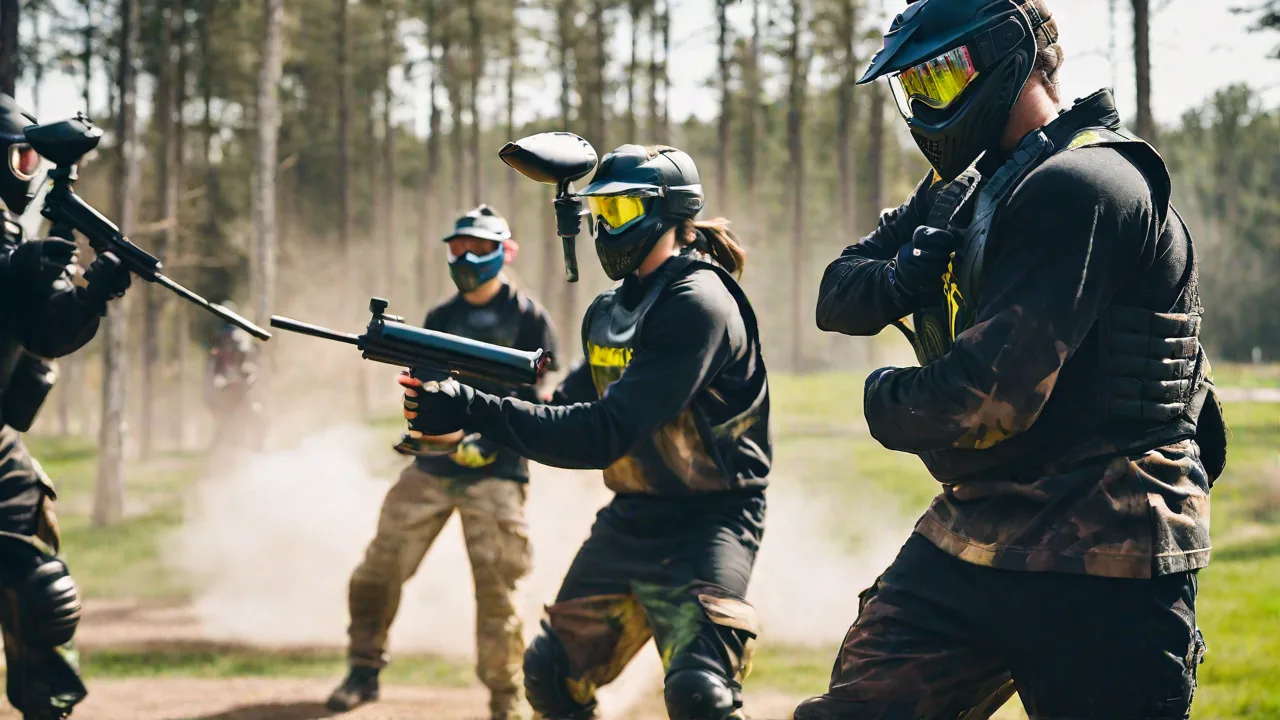
The Importance of Communication and Teamwork in Paintball Success
Why Communication Is the Backbone of Paintball Strategy
Paintball is a high-adrenaline sport where split-second decisions determine whether your team captures the flag or gets eliminated. While fast reflexes and accurate shooting are valuable, they mean little without a team that can exchange information and coordinate under pressure. Communication transforms a collection of individuals into a cohesive unit capable of adapting to the chaos of the field. When bullets—or rather, paintballs—are flying, the team that talks effectively moves faster, reacts quicker, and wins more often.
Verbal Communication: Speed and Clarity Under Fire
In the middle of a game, shouting “Enemy at 3 o’clock” is faster and more precise than describing the position with a sentence. Teams that develop a shared vocabulary for common situations gain an edge. Standard calls include:
- “Cover me!” – Asks a teammate to suppress the enemy while you move.
- “Reloading!” – Alerts others that you are out of paint and vulnerable.
- “Move up!” – Signals a coordinated advance.
- “Out!” – Informs the team you have been hit and are leaving the field.
- “Contact!” – Announces enemy sighting, often followed by location and number.
- “Lane!” – Indicates you are holding fire on a specific path to prevent enemy movement.
Repeating key information, such as “Enemy behind the snake corner on the left,” ensures the message reaches everyone, even if background noise spikes. Teams that practice these calls in drills react instinctively during games, reducing hesitation. Verbal communication also plays a role in morale—a quick “Nice shot!” or “You got it!” can keep spirits high when the game gets tough.
One common mistake is shouting too loudly, giving away your position. Teams should practice volume control: loud enough for teammates within 30 feet, soft enough that opponents don’t hear. In speedball, where bunkers are close, whispered calls combined with hand signals work best.
Non-Verbal Communication: Silent Signals for Stealth Operations
When the opposing team is close enough to hear whispers, hand signals become essential. A clenched fist can mean “stop,” pointing two fingers toward the eyes signals “look at me,” and touching the top of the helmet can indicate “sniper sighted.” Non-verbal communication also prevents alerting enemies to your plan. Many tournament-level teams develop their own gesture sets, which they review during pre-game briefings.
Effective hand signals must be simple, visible, and memorable. Common signals include:
- Hand flat, palm down, moving side to side – “Take cover” or “stay low.”
- Tapping the barrel – “I’m moving forward” or “push.”
- Finger making a circle – “Regroup” or “rally here.”
- Two fingers pointing from eyes forward – “Watch that direction.”
For a deeper look at building a signal system, check out this guide to paintball hand signals. Some teams also use colored armbands or helmet markings to identify leaders or specific roles, adding a visual layer to communication.
Teamwork: The Engine of Strategic Execution
Individual talent can create highlight reels, but teamwork wins tournaments. When every player knows their role and trusts that others will execute theirs, the team can execute complex maneuvers like flanking, baiting, and split pushes. Teamwork is not just about following orders—it’s about anticipating what your teammates need and filling gaps before they become problems.
Assigning Roles Based on Play Style
Not every player should try to be the lone hero. Effective teams distribute responsibilities based on skills, experience, and personality:
- Front players (attackers) – Aggressive, fast-moving players who push into enemy territory and draw fire. They need speed, endurance, and the ability to snap-shoot on the move.
- Back players (support) – Usually armed with markers that have large hoppers to provide suppressing fire. They have a wide field of view and direct traffic, calling out enemy movements.
- Mid players (connectors) – Flexible players who cover gaps, relay information, and fill in when a teammate is eliminated. They must be good at reading the field and switching roles on the fly.
- Flag carriers/objective players – Tasked with capturing the flag or planting the bomb, they rely on protection from the rest of the team. These players should be tactically patient and physically resilient.
- Specialist roles (sniper, radio operator, medic in scenario games) – For larger formats, designating a player to hold specific gear or execute a unique function can be critical.
Aligning roles with individual strengths—speed, accuracy, stamina—builds confidence and efficiency. A player who hates staying still should not be forced into a stationary cover role. During tryouts or early practices, rotate positions to discover where each player excels.
Practice Drills That Build Coordination
Regular practice is the only way to turn theory into instinct. Drills that specifically target teamwork include:
- Bounding overwatch – One group moves while another provides cover, then they switch. This teaches timing and trust in suppressive fire.
- Communication-only games – Players must call out every move, even if obvious, to reinforce the habit. Penalty for silence: a point deduction.
- Blind rotation drills – Players rotate positions blindfolded (with safety) to learn how to rely on calls from teammates. Builds trust and forces clear communication.
- 2v3 or 3v4 scenarios – Forcing a numerical disadvantage builds problem-solving and reliance on teamwork. The smaller team must communicate precisely to survive.
- Relay race with paintball gear – Players must pass a flag or marker while moving through bunkers, practicing handoffs and spatial awareness.
After each drill, debrief for 2-3 minutes. Ask: “What did we do well? Where did communication break down?” This feedback loop accelerates improvement.
The Trust Factor: Why It Takes Time
Trust doesn’t appear overnight. It grows when players see that their teammate will actually provide cover fire when asked, or that the designated flag carrier will sprint the moment the lane clears. Teams that warm up together before a game, debrief after losses, and socialize off the field build the interpersonal bonds that translate into seamless teamwork during matches.
A practical way to build trust: run “buddy system” drills where two players are paired for an entire session. They must stay within sight of each other and coordinate all movements. Over time, they learn each other’s tendencies and develop a shorthand. This bond becomes a foundation for the whole team.
Common Communication and Teamwork Failures (And How to Fix Them)
Even experienced teams stumble. Recognizing these pitfalls helps avoid repeated mistakes.
Over-communication or Too Much Noise
When everyone talks at once, essential calls get buried. The solution is to designate a primary communicator (usually the team captain or the player with the best field view). Others speak only when they have critical information. A simple rule: “If it won’t change the outcome in the next five seconds, keep it brief.” Consider using a “radio discipline” drill where players can only speak when tapped by the leader.
Undefined Roles Lead to Confusion
If nobody knows who is responsible for the left flank, that flank will be weak. During the pre-game huddle, clearly state each player’s starting position and primary responsibility. Use a whiteboard or field diagram if necessary. Assign a backup for each role in case of elimination.
Failing to Adapt After Eliminations
When a teammate is hit, the plan may need to change immediately. Teams that have practiced “next man up” mentality shift roles quickly. For example, if the flag carrier is eliminated, the nearest mid player should grab the flag and the support player moves up to fill the gap. Run emergency rotation drills where the coach randomly calls out “Player A is out” mid-game, forcing the team to reorganize.
Ego and Blame-Game
After a loss, pointing fingers destroys teamwork. Cultivate a culture where mistakes are analyzed, not criticized. Use “I” statements: “I missed the call on that flank” instead of “You didn’t cover me.” The best teams hold post-match reviews that are constructive, not punitive.
Leadership: The Catalyst for Communication and Teamwork
A strong leader does not simply give orders; they facilitate communication, keep morale high, and make quick tactical decisions. The leader should be someone with good situational awareness and the respect of the team. During a game, the leader echoes critical calls, ensures no one is isolated, and can call a timeout if the team is losing coordination.
Leadership also extends to post-game reflection. A quick two-minute debrief after each round—what worked, what didn’t—reinforces learning and prevents the same errors. A good leader also rotates responsibilities; letting other players call plays during practice builds their confidence and prepares them to step up if the leader is eliminated.
For tips on developing leadership skills in recreational paintball, see this article on paintball leadership.
Building a Communication and Teamwork Culture Off the Field
Teams that only communicate during games often struggle with chemistry. Simple off-field habits make a difference:
- Pre-game strategy meetings – Discuss general tactics, map layout, and contingency plans. Use a whiteboard or tablet to draw routes.
- Shared gear maintenance sessions – Cleaning markers together builds camaraderie and trust. It’s also a chance to discuss recent games in a relaxed environment.
- Watch game footage – Reviewing videos of past games reveals communication gaps and positioning mistakes. Pause and ask “What should we have called here?”
- Team social events – A barbecue, paintball movie night, or even a group hike strengthens bonds. Players who are friends off the field communicate better on it.
- Celebrate small wins – Acknowledging a good assist or a perfectly executed flank encourages positive behavior. Create a “play of the week” tradition.
Advanced Teamwork Strategies for Competitive Play
Once basic communication and role assignment are solid, teams can move to more nuanced tactics.
Flanking and Pincer Movements
A classic two-prong attack: one group holds the enemy’s attention from the front while a second group moves around the side. This requires precise timing and constant updates about enemy positions. The flanking squad must signal when they are in position; the front group must not push too early. Use hand signals or a pre-arranged radio code word (e.g., “Eagle” means flank is ready).
Suppressing Fire as a Team Tool
Rather than trying to hit opponents, suppression fire forces them to keep their heads down. One player with a high-capacity marker can lay down a stream of paint while teammates relocate or capture objectives. The key is communication: “I’m laying cover, move now!” followed by the moving player’s acknowledgment. Suppression also works defensively to block a lane when retreating.
Bait and Switch
A bait player deliberately exposes themselves to draw fire, revealing enemy positions. As soon as the enemy shoots, the bait player calls out the location, and teammates engage that position. This works best when the team can predict the enemy’s response. For example, bait near a known sniper nest to get them to fire.
Overlap and Crossfire
Position two or more players at angles to each other so that the enemy cannot hide without exposing themselves to at least one shooter. This tactic requires constant communication to adjust angles as the enemy moves. Use calls like “I’m on his left, hold him right.”
Gear and Communication Tools
Physical equipment also impacts communication. Many players use two-way radios with headsets, especially on large outdoor fields. In indoor or speedball arenas, voice masks or microphones embedded in masks can improve clarity. However, radios introduce their own challenges: channel noise, battery life, and the temptation to talk too much. Teams should test radio volume and clarity before the game starts, and agree on a simple protocol (e.g., say the recipient’s name first, then the message).
For those considering radio systems, this review of paintball communication gear covers budget and pro options. A cheaper alternative is using hands-free headsets that clip onto mask straps; these reduce background noise without the complexity of radios.
Don’t overlook the mask itself – a full-seal thermal mask with a comfortable voice port reduces muffling. Some masks come with built-in microphone mounts. Consider wearing a throat mic for very loud environments.
Adapting Communication to Different Game Formats
Communication needs vary by format:
- Speedball (small field, fast-paced) – Load calls are constant, and players need to re-establish positions every few seconds. Short phrases and hand signals work best. Avoid long descriptions; just “snake – one” means one enemy at snake.
- Woodsball / scenario games (large field, longer games) – Radios are more useful because distances are greater. Ambushes and stealth require minimal verbal talk. Use code words for movement (“turtle” = slow advance). Establish rally points.
- Magfed or limited paint games – Because shots are scarce, communication must prioritize target identification and movement over suppression fire. Calls like “Clean shot?” become important before firing.
- Night games or low-visibility – Light signals (flashlight taps or colored glow sticks) supplement hand signals. Agree on meaning beforehand.
Teams that play a specific format should tailor their communication drills accordingly. For example, speedball teams practice rapid-fire calls; woodsball teams practice silent movement and radio etiquette.
Psychological Benefits of Strong Communication and Teamwork
Beyond winning, good teamwork reduces individual stress. Knowing that teammates have your back allows you to take calculated risks without fear. It also makes the game more enjoyable—players who feel connected to their team are more likely to show up at practice and recruit new members. A positive team environment fosters learning, as newer players feel safe asking questions or admitting mistakes.
Communication also helps regulate adrenaline. When you call out information, you engage your cognitive brain, which can prevent panic. Teams that stay talkative under pressure are less likely to freeze. The simple act of saying “I’m moving to center bunker” keeps you focused and grounded.
Conclusion: The Multiplier Effect of Communication and Teamwork
Paintball is one of the few sports where a group of average players can consistently beat a group of talented individuals by using superior communication and teamwork. The difference is not in the markers or the paint quality; it is in the quality of information flow and mutual support. By practicing verbal and non-verbal skills, defining roles, and building trust, any team can elevate its performance. The next time you step onto the field, remember that your marker is only part of the equation—your voice and your willingness to work with others are just as powerful. Great teams don’t just shoot well; they talk well, trust deeply, and move as one. Make communication and teamwork your team’s superpower.