Table of Contents
The paintball field stretches before you—but what kind of field is it? A climate-controlled indoor arena with artificial bunkers and strategic lighting? Or a sprawling outdoor landscape with natural terrain, real trees, and the unpredictable elements of nature? This fundamental choice shapes every aspect of your paintball experience, from the tactics you'll employ to the equipment you'll need, from the physical demands you'll face to the memories you'll create.
Indoor and outdoor paintball represent two distinct expressions of the same thrilling sport. Each environment offers unique advantages, creates different challenges, and attracts players for different reasons. Understanding these differences—and matching them to your preferences, skill level, and goals—ensures you'll find the paintball experience that resonates most powerfully with your vision of the perfect game.
For newcomers, the choice between indoor and outdoor paintball can seem overwhelming. Both options promise excitement, competition, and the adrenaline rush that makes paintball so compelling. But the experiences differ significantly enough that players often develop strong preferences for one environment over the other. Learning what each offers helps you make informed decisions about where to invest your time, energy, and resources.
This comprehensive guide examines indoor and outdoor paintball from every angle. You'll discover how gameplay differs between environments, what equipment considerations each demands, how weather and conditions affect outdoor play, and why indoor facilities offer certain guarantees that outdoor fields cannot. Beyond comparison, you'll gain practical knowledge for succeeding in both environments—tactics that work indoors versus outdoors, physical preparation for different demands, and strategies for maximizing enjoyment regardless of where you play.
Whether you're a complete beginner trying to decide where to start your paintball journey, an experienced player curious about the environment you haven't yet explored, or someone organizing a group outing seeking the best fit for your participants, this guide provides the knowledge for confident decisions about indoor versus outdoor paintball.
Understanding the Paintball Experience: Core Elements
Before diving into environmental differences, understanding what makes paintball paintball—the core elements that remain constant regardless of venue—provides foundation for appreciating how environments modify the experience.
What Paintball Actually Is
At its heart, paintball is a competitive sport where players attempt to eliminate opponents by marking them with paint-filled projectiles fired from pneumatic markers. This simple premise supports extraordinary variety in how games unfold, what objectives players pursue, and what experiences participants have.
The fundamental equipment remains consistent across environments. Paintball markers—commonly called guns—use compressed gas (CO2 or high-pressure air) to propel gelatin-shelled paintballs at velocities typically limited to 280-300 feet per second. These paintballs burst on impact, leaving visible paint marks that indicate successful hits. Protective masks covering eyes and face are absolutely mandatory in all paintball environments.
Game formats vary widely but share common elements. Players typically compete in teams, though individual elimination formats exist. Most games involve objectives beyond simple elimination—capturing flags, controlling territories, completing missions, or achieving scenario-specific goals. Time limits, respawn rules, and scoring systems create structure around the fundamental shoot-or-be-shot dynamic.
The appeal transcends demographics. Paintball attracts participants from all backgrounds, ages (typically 10-12 and older), and fitness levels. The sport rewards different skills—athleticism certainly helps, but tactical thinking, teamwork, communication, and patience matter equally or more. Players who can't outrun opponents can outsmart them instead.
The Physical and Mental Experience
Paintball engages both body and mind in ways that distinguish it from passive entertainment.
Physical demands include running, crouching, crawling, diving, and sustained movement throughout games. Heart rates elevate. Muscles engage. Sweat flows. The physical exertion creates workout benefits while the game context makes the exercise feel like play rather than work.
Mental engagement encompasses situational awareness, strategic planning, split-second decision-making, and team coordination. Players must track opponent positions, anticipate movements, communicate effectively, and execute plans under pressure. This mental stimulation creates flow states where time seems to stop and focus narrows to the immediate challenge.
Emotional intensity runs high during paintball. The anticipation before games, the adrenaline during engagement, the satisfaction of successful plays, and the camaraderie of shared experience create emotional peaks that players remember long after games end. Even the disappointment of elimination contributes to the emotional richness—you can't feel triumph without risking defeat.
Why Environment Matters
The playing environment modifies every aspect of the paintball experience. Understanding how reveals why the indoor versus outdoor choice matters so much.
Tactical options change with environment. Indoor arenas offer specific cover positions, predictable sight lines, and controlled variables. Outdoor fields present natural terrain variations, environmental factors, and dynamic conditions that require adaptive strategy.
Physical demands shift between environments. Indoor play often emphasizes quick movements in compact spaces. Outdoor play may require sustained movement across larger distances, navigation of uneven terrain, and endurance for longer games.
Sensory experience differs dramatically. Indoor arenas control lighting, temperature, and ambient conditions. Outdoor fields expose players to natural light variation, weather effects, ambient sounds, and the full sensory palette of outdoor environments.
Social dynamics may vary between venue types. Indoor facilities often serve smaller groups in more intimate settings. Outdoor fields may host larger events with more participants and different social atmospheres.
Understanding these environmental influences helps you choose the paintball experience that best matches what you're seeking—whether that's controlled intensity, natural immersion, social connection, or competitive challenge.
Indoor Paintball: The Controlled Arena Experience
Indoor paintball facilities create environments where variables are minimized and intensity is maximized. These purpose-built arenas offer experiences that outdoor play cannot replicate—for better and worse, depending on your preferences.
The Indoor Environment Defined
Indoor paintball takes place in enclosed structures designed specifically for the sport. These facilities range from converted warehouses to purpose-built arenas, from small intimate spaces to multi-level complexes spanning thousands of square feet.
Climate control defines indoor play. Temperature, humidity, and air quality remain consistent regardless of external conditions. Players never face weather-related disruptions. Summer heat, winter cold, rain, wind—none affect indoor games. This consistency enables year-round play regardless of geographic location or season.
Artificial environments allow creative design. Without natural terrain constraints, indoor facilities can create any imaginable playing environment. Urban combat scenarios with building facades and street layouts. Industrial settings with machinery and equipment obstacles. Fantasy environments limited only by designer imagination.
This creative freedom produces unique experiences that nature doesn't provide.
Lighting control shapes atmosphere. Indoor facilities manipulate lighting to create mood, challenge visibility, and enhance immersion. Low-light scenarios test players differently than brightly-lit arenas. Strobe effects add disorientation. Colored lighting transforms familiar spaces.
These lighting options simply don't exist outdoors.
Contained spaces create intensity. Indoor arenas concentrate action within defined boundaries. Players can't spread out indefinitely as they might outdoors. Engagements happen at closer ranges. Games conclude faster.
The intensity per minute of play often exceeds outdoor equivalents.
Advantages of Indoor Paintball
Indoor facilities offer genuine advantages that attract many players.
Weather independence removes barriers. When rain falls, outdoor fields become mud pits. When temperatures drop, outdoor play becomes uncomfortable or impossible. Indoor facilities operate regardless of external conditions. Players can plan paintball activities without weather anxiety, knowing games will proceed as scheduled.
Consistent conditions enable fair competition. Without wind affecting paintball trajectory, without sun glare compromising visibility, without terrain variations favoring certain positions, indoor play offers more level playing fields. Performance differences reflect skill differences rather than environmental luck.
Year-round availability expands access. In climates with harsh winters, outdoor paintball may be impractical for months at a time. Indoor facilities keep paintball accessible throughout the year, maintaining player skills and community connections during otherwise idle seasons.
Controlled intensity suits certain preferences. Some players prefer the concentrated, fast-paced action indoor arenas provide. Shorter games, closer engagements, and higher action density appeal to those seeking maximum excitement in minimum time.
Comfort amenities enhance experience. Indoor facilities typically offer climate-controlled staging areas, indoor restrooms, refreshment options, and comfortable spaces for groups between games. These amenities matter for birthday parties, corporate events, and casual outings where participant comfort affects overall experience.
Beginner accessibility may be higher. The controlled environment, predictable conditions, and typically smaller playing areas can feel less overwhelming to newcomers than vast outdoor fields. Indoor facilities often structure sessions specifically for beginners, with staff guidance and appropriate game formats.
Common Indoor Formats and Game Types
Indoor facilities host specific game formats that suit their characteristics.
Speedball dominates indoor play. This fast-paced format uses inflatable bunkers arranged symmetrically on compact fields. Teams start at opposite ends and engage immediately. Games conclude quickly—often in minutes. The format emphasizes speed, aggression, and snap-shooting skills.
Speedball's equipment and space requirements make it naturally suited to indoor environments.
Hyperball variations use similar concepts with different obstacle types—tubes, barrels, and constructed bunkers rather than inflatable air bunkers. The gameplay remains fast and aggressive, suited to indoor intensity.
CQB (Close Quarters Battle) scenarios create tactical gameplay in tight spaces. Building interiors, room-clearing exercises, and hallway combat test different skills than open-field play. Indoor facilities can construct these environments permanently, offering consistent CQB experiences.
Elimination games in indoor settings often conclude faster than outdoor equivalents due to condensed playing areas. Quick elimination rounds can cycle through many games per session, maximizing action time.
Capture the flag and objective games adapt to indoor environments with flag positions established within arena constraints. The contained environment makes flag locations predictable but doesn't eliminate strategic depth.
Indoor Field Design and Features
Understanding how indoor fields are designed helps players adapt their strategies.
Symmetrical layouts characterize competitive indoor fields. Both teams face identical layouts with mirror-image bunker positions. This symmetry eliminates positional advantage, making team skill the determining factor.
Asymmetrical designs appear in scenario-focused indoor facilities. Defenders might have fortified positions while attackers approach across open ground. These asymmetrical layouts create role diversity and scenario immersion.
Inflatable bunkers dominate indoor speedball because they're lightweight, safe upon collision, and reconfigurable between events. Different bunker shapes—snakes, cans, doritos, cakes—create varied cover options requiring different techniques.
Constructed obstacles in some indoor facilities provide permanent features with more variety than inflatables. Walls, platforms, buildings, and multi-level structures create tactical complexity.
Netting and boundaries define playing areas within larger indoor spaces. This containment keeps games within designated zones and contains paint overspray from affecting non-playing areas.
Physical Demands of Indoor Play
Indoor paintball creates specific physical requirements.
Quick, explosive movements characterize indoor play. Sprinting between bunkers, rapid direction changes, and fast reaction times matter more than sustained endurance in compact indoor environments.
Lower stance requirements mean indoor play involves significant time crouching, kneeling, or staying low behind cover. Players with knee issues may find indoor play more demanding than formats allowing more upright positions.
Proximity to opponents in indoor settings means hits come at closer range with less reaction time. The intensity can feel higher even when actual impact energy remains constant due to the psychological effect of close engagement.
Shorter game duration may reduce overall physical demands compared to long outdoor games, but the intensity per minute often exceeds outdoor play. You might play more games in less time, accumulating similar total exertion.
Limitations of Indoor Paintball
Honesty about indoor limitations helps players set appropriate expectations.
Space constraints limit certain experiences. The vast, immersive environments that large outdoor fields provide simply can't be replicated indoors. Players seeking wilderness combat scenarios won't find them in indoor arenas.
Natural terrain absence affects realism. For players attracted to paintball's combat simulation aspects, artificial indoor environments may feel less authentic than outdoor settings with real trees, hills, and natural features.
Noise concentration can be intense. Enclosed spaces concentrate the sound of paintball markers firing. The acoustic environment can feel overwhelming, particularly for noise-sensitive players.
Ventilation considerations affect air quality. Despite climate control, indoor facilities must manage paint fumes, propellant gases, and general air quality. Quality facilities address these concerns effectively, but lesser venues may have noticeable air quality issues.
Cost structures may differ. Indoor facilities face significant overhead—building costs, climate control expenses, lighting—that may translate to higher per-game pricing than outdoor alternatives.
Outdoor Paintball: The Natural Battlefield
Outdoor paintball returns the sport to its origins—games played in natural environments with real terrain, real weather, and the vast spaces that nature provides. This experience differs fundamentally from indoor play, offering advantages and challenges that indoor facilities cannot replicate.
The Outdoor Environment Defined
Outdoor paintball takes place in natural or semi-natural settings ranging from forests and fields to purpose-built outdoor courses incorporating both natural and constructed elements.
Natural terrain defines outdoor play. Real trees provide cover. Actual hills create elevation changes. Genuine terrain variations—soft ground, rocky areas, stream crossings—affect movement and positioning. This natural environment creates experiences impossible to simulate indoors.
Space availability expands dramatically. Outdoor fields may span dozens or hundreds of acres rather than indoor arenas' thousands of square feet. This space enables larger games, longer engagement distances, and more complex tactical scenarios.
Environmental conditions become factors. Weather affects gameplay directly. Temperature impacts comfort and equipment performance. Natural lighting varies throughout day and season. These factors add complexity but also realism that many players value.
Flora and fauna participate. Trees shed leaves that crunch underfoot. Insects buzz around summer games. Birds call overhead. The natural world's presence enhances immersion for players seeking authentic outdoor experiences.
Advantages of Outdoor Paintball
Outdoor environments offer unique benefits.
Immersive natural settings create authenticity. For players attracted to paintball's tactical and simulation aspects, outdoor environments provide authenticity that artificial settings cannot match. Moving through actual forests, using real terrain for cover, and operating in genuine outdoor conditions creates experiences that feel real in ways indoor play doesn't.
Space enables diverse gameplay. Large outdoor fields support game formats impossible in compact indoor arenas. Long-range engagements, extensive flanking maneuvers, and complex multi-team scenarios require space that only outdoor venues provide.
Scenario games flourish outdoors. The most elaborate scenario events—multi-day operations, hundreds of participants, complex storylines—happen outdoors where space accommodates the scale these events require.
Physical challenge encompasses more dimensions. Outdoor play tests endurance over distance, navigation skills across terrain, and adaptation to environmental conditions. This broader physical challenge appeals to players seeking comprehensive tests of capability.
Connection with nature enhances experience. Beyond paintball specifics, spending time outdoors in natural settings provides benefits that enclosed spaces cannot. Fresh air, natural beauty, and disconnection from indoor environments appeal to players seeking outdoor experiences.
Cost structures may favor participants. Lower overhead costs for outdoor venues—no building climate control, reduced construction requirements—may translate to lower pricing for players, though this varies by specific venue.
Outdoor Game Formats and Types
Outdoor environments support game formats suited to their characteristics.
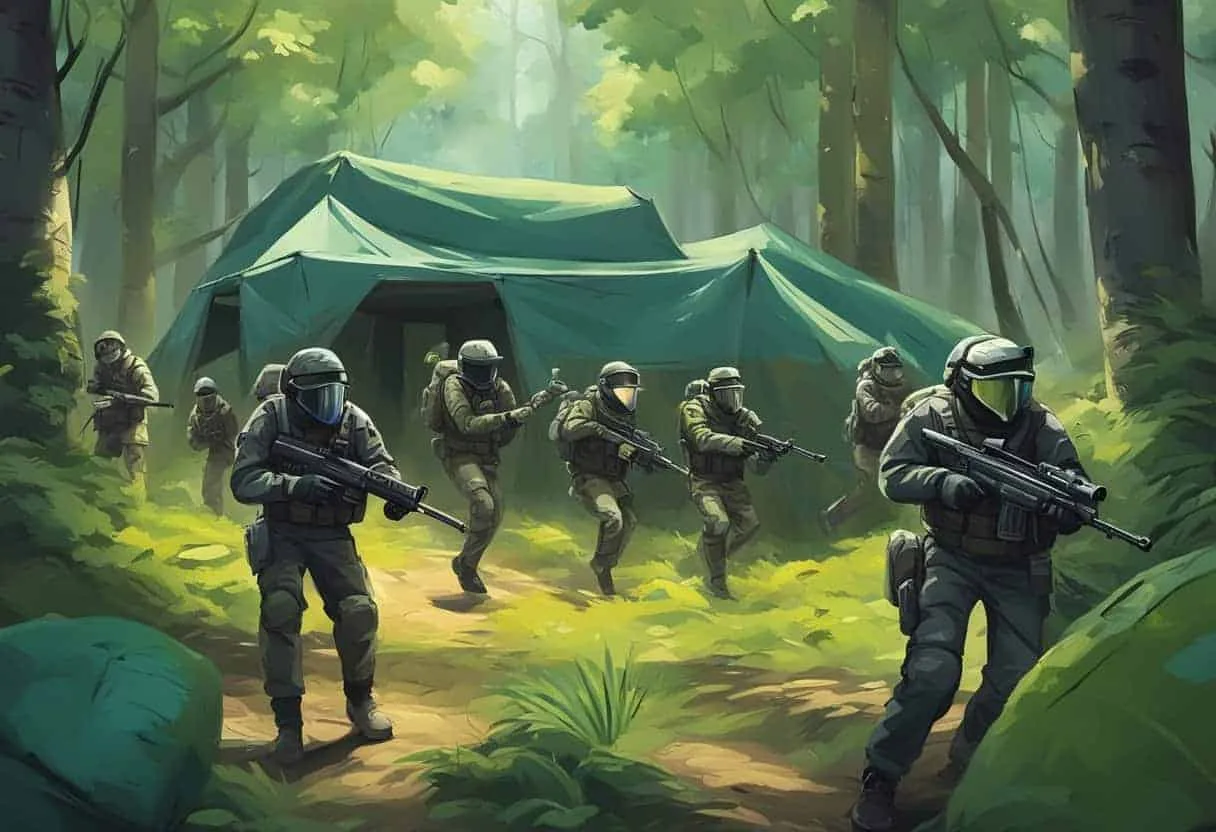
Woodsball represents the original paintball format—games played in wooded terrain using natural features for cover and concealment. Movement through trees, use of bushes for hiding, and navigation of forest terrain define woodsball play. This format rewards patience, stealth, and marksmanship over pure speed.
Scenario paintball creates structured narratives played out across outdoor fields. Players assume roles—military units, civilians, special forces—and pursue mission objectives. Elaborate scenarios may span entire weekends with hundreds of participants pursuing interconnected goals. These large-scale events require outdoor space and benefit from natural environmental immersion.
MilSim (Military Simulation) takes scenario concepts further with realistic equipment, authentic tactics, and strict rule adherence. MilSim events often require specific gear, follow military procedures, and create experiences approaching actual military training exercises.
Big games assemble large numbers of players—sometimes thousands—for massive outdoor battles. These events create chaos, spectacle, and unique experiences impossible at smaller scales. Only outdoor venues can accommodate such gatherings.
Capture the flag and objective games in outdoor settings become strategic operations involving longer distances, more complex terrain navigation, and extended timeframes compared to indoor equivalents.
Pump play and limited ammunition formats suit outdoor environments where the slower pace allows deliberate gameplay rewarding accuracy over volume.
Terrain and Environmental Factors
Outdoor play requires understanding environmental influences.
Natural cover options include trees, rocks, bushes, depressions, hills, and any other terrain feature that blocks sight lines or paintball paths. Learning to identify and use natural cover is essential outdoor skill.
Terrain affects movement. Soft ground slows running. Rocky areas require careful foot placement. Slopes create physical challenges. Wet areas may be slippery. Successful outdoor players read terrain and plan movement accordingly.
Sight lines in outdoor environments differ from indoor settings. Forest cover may limit visibility to yards while open areas might offer hundred-yard sight lines. Understanding how terrain creates and blocks sight lines informs tactical decisions.
Sound travels differently outdoors. Without walls to contain and reflect noise, outdoor environments often feel quieter despite identical equipment use. However, natural surfaces may amplify sounds—crunching leaves, snapping twigs—that reveal player positions.
Flora variation across seasons changes outdoor fields throughout the year. Summer foliage provides maximum cover. Fall leaves crunch underfoot revealing movement. Winter barren trees reduce concealment. Spring mud affects mobility.
Seasonal changes create different experiences on the same field.
Weather Considerations for Outdoor Play
Weather represents outdoor paintball's most significant variable factor.
Temperature affects comfort and performance. Cold weather requires appropriate clothing layers. Hot weather demands hydration attention. Extreme temperatures may make play impractical or require adjusted game formats with more breaks.
Rain impacts gameplay substantially. Light rain may be playable but affects visibility and footing. Heavy rain makes outdoor play impractical—masks fog, fields become mud, and conditions become dangerous. Smart outdoor players check forecasts before committing to outdoor sessions.
Wind affects paintball trajectory. The lightweight spherical projectiles are significantly affected by wind. Strong wind makes accuracy difficult regardless of skill. Wind considerations affect outdoor strategy in ways irrelevant to indoor play.
Sun position matters tactically. Playing with the sun behind you gives advantage—opponents look into glare while you have clear vision. Sun position changes throughout day, potentially favoring different field positions at different times.
Humidity affects equipment. Very humid conditions may affect marker performance, mask fogging, and general comfort. Dry conditions may create dust issues on certain field types.
Planning around weather becomes essential for outdoor paintball. Unlike indoor facilities where games proceed regardless of conditions, outdoor play requires backup plans, weather monitoring, and flexibility.
Physical Demands of Outdoor Play
Outdoor environments create distinct physical requirements.
Endurance matters more outdoors. Large fields require covering significant distances. Long games demand sustained activity. Outdoor players benefit from cardiovascular conditioning that indoor-focused players may not need.
Terrain navigation challenges balance and agility. Uneven ground, obstacles to navigate, and varied surfaces test physical capabilities beyond what flat indoor surfaces require.
Environmental exposure demands preparation. Players must prepare for temperature management, sun protection, hydration in heat, and warmth in cold. These preparation requirements add complexity beyond simply showing up to play.
Full-body engagement characterizes outdoor play. Crawling through underbrush, climbing over obstacles, running across fields—outdoor play involves more complete physical engagement than indoor alternatives often require.
Limitations of Outdoor Paintball
Understanding outdoor limitations helps players prepare appropriately.
Weather dependence creates uncertainty. Rain cancels sessions. Extreme temperatures may do likewise. This uncertainty makes planning difficult and may waste preparation effort when conditions force cancellation.
Seasonal availability varies by location. In northern climates, outdoor paintball may be impractical for months during winter. This limitation restricts outdoor play to warmer seasons for many players.
Terrain challenges may exclude some participants. Players with mobility limitations may struggle with outdoor terrain that indoor flat surfaces don't present. Families with young children may find outdoor terrain more challenging than controlled indoor environments.
Creature encounters are possible. Depending on location, outdoor play may involve insects, snakes, poison ivy, or other natural hazards absent from indoor environments. Awareness and preparation address these concerns but cannot eliminate them entirely.
Facility amenities may be limited. Outdoor fields may have more basic amenities than indoor facilities—portable restrooms rather than permanent facilities, limited shelter, no climate control in staging areas.
Direct Comparison: Indoor vs Outdoor Paintball
Examining specific aspects side-by-side clarifies how environments differ.
Gameplay Pace and Intensity
Indoor play typically moves faster. Smaller fields mean quicker engagements. Games conclude in minutes rather than extended periods. Action density—events per time unit—often exceeds outdoor equivalents.
Outdoor play often involves more varied pacing. Extended movement periods without contact contrast with intense engagement bursts. The rhythm alternates between patience and action rather than maintaining constant intensity.
Player preference determines which pace appeals. Those seeking maximum action in minimum time may prefer indoor intensity. Those seeking varied experiences with strategic depth may prefer outdoor pacing.
Tactical Approaches
Indoor tactics emphasize speed and aggression. With limited space and time, aggressive advancement often succeeds better than patient defense. Snap-shooting—quickly emerging and firing before returning to cover—becomes essential. Communication must be rapid and clear in fast-moving indoor games.
Outdoor tactics reward patience and planning. Larger spaces enable flanking maneuvers, ambush setups, and strategic positioning that indoor arenas don't accommodate. Stealth and concealment matter more when terrain provides hiding opportunities.
Movement patterns differ significantly. Indoor movement involves bunker-to-bunker advancement across short distances. Outdoor movement may require sustained travel across open ground, use of terrain for concealment during approach, and navigation decisions indoor play doesn't present.
Communication needs vary. Indoor communication must be rapid, often relying on hand signals and brief calls due to noise and pace. Outdoor communication may involve more elaborate coordination given larger areas and more complex maneuvers.
Equipment Considerations
Marker selection may differ between environments. Indoor speedball typically uses high-rate-of-fire electronic markers optimized for the format's demands. Outdoor woodsball may favor markers with different characteristics—longer range accuracy, realistic aesthetics, or specific scenario requirements.
Barrel length considerations differ. Shorter barrels improve maneuverability in tight indoor spaces. Longer barrels may provide advantages in outdoor environments where range matters more.
Clothing requirements vary substantially. Indoor play in climate-controlled environments allows consistent clothing choices. Outdoor play requires weather-appropriate attire—layers for cold, lightweight materials for heat, waterproof options for rain.
Protective gear beyond masks may differ. Knee pads matter more in indoor environments with hard floors and frequent low positions. Outdoor play on soft ground may require knee protection less urgently. Gloves may matter more outdoors where terrain interaction creates hand exposure.
Additional equipment for outdoors may include items unnecessary indoors: hydration systems for hot weather, weather protection, terrain-appropriate footwear, and potentially camping gear for extended scenario events.
Social Dynamics and Group Sizes
Indoor facilities often serve smaller groups. Arena capacity limits participation. This creates more intimate experiences suitable for birthday parties, small corporate events, or friend groups seeking private sessions.
Outdoor fields accommodate larger gatherings. Space availability enables big games, large scenario events, and mass participation experiences impossible indoors. The social dynamics of large-scale events differ from intimate indoor gatherings.
Walk-on and public session dynamics may vary. Indoor facilities may offer more structured public sessions with controlled participation. Outdoor fields may have more open, less structured public play opportunities.
Cost Considerations
Pricing structures differ between indoor and outdoor venues, though generalizations are difficult as specific venues vary widely.
Indoor facilities face higher overhead. Building costs, climate control, lighting, and insurance for enclosed spaces create expenses that must be recovered through pricing. However, efficiency of operation—higher turnover, weather-independent scheduling—may offset higher costs.
Outdoor facilities may have lower base costs but face weather-related revenue uncertainty. Lost revenue from rain days affects business models differently than climate-controlled indoor operations.
Total cost of participation includes venue fees plus personal equipment, paint, and ancillary expenses. These totals may favor either environment depending on specific circumstances.
Skill Development
Indoor play develops specific skills: quick reflexes, snap-shooting, aggressive movement, and rapid decision-making. The intensity creates learning environments where skills develop quickly through high-repetition practice.
Outdoor play develops different skills: patience, terrain reading, long-range accuracy, stealth movement, and endurance. The varied conditions create broader skill development but potentially slower repetition-based improvement.
Complete players benefit from both environments. Skills developed indoors transfer to outdoor settings and vice versa. Players seeking comprehensive capability should experience both environment types.
Choosing Between Indoor and Outdoor Paintball
With understanding of both environments, making the right choice for your specific situation becomes clearer.
Consider Your Priorities
Different priorities point toward different environments.
If weather certainty matters: Indoor facilities guarantee games proceed regardless of conditions. For events that cannot be rescheduled—birthday parties, corporate outings, special occasions—indoor venues eliminate weather anxiety.
If immersion and realism matter: Outdoor environments provide authenticity that artificial settings cannot match. Players seeking tactical simulation experiences typically prefer outdoor settings.
If physical challenge matters: Outdoor play tests broader physical capabilities—endurance, terrain navigation, environmental adaptation. Players seeking comprehensive physical challenge may prefer outdoor settings.
If convenience matters: Indoor facilities often offer more convenient amenities, controlled conditions, and efficient session structures. Players prioritizing easy, comfortable experiences may prefer indoor options.
If group dynamics matter: Consider your group's characteristics. Families with young children may appreciate controlled indoor environments. Adventure-seeking adults may prefer outdoor challenges. Birthday parties might suit indoor predictability. Bachelor parties might prefer outdoor adventure.
Consider Your Experience Level
Experience level affects environment suitability.
Complete beginners may find indoor environments less overwhelming. Smaller spaces, controlled conditions, and typically structured sessions create more manageable introductions. However, some beginners prefer jumping into outdoor adventure immediately.
Developing players benefit from indoor intensity for skill building and outdoor variety for experience breadth. Alternating between environments accelerates comprehensive development.
Experienced players often develop preferences based on accumulated experience. Some prefer indoor competition; others prefer outdoor immersion. Personal preference legitimately guides experienced players' choices.
Consider Seasonal Factors
Season affects environment choice, particularly in climates with significant seasonal variation.
Summer favors outdoor play in most locations. Pleasant temperatures, dry conditions, and full foliage create optimal outdoor experiences. Indoor facilities remain available but may be less appealing when outdoor conditions are favorable.
Winter may require indoor options in cold climates. When outdoor play becomes impractical, indoor facilities maintain access to paintball during otherwise idle months.
Shoulder seasons (spring and fall) offer good outdoor conditions in many locations while indoor facilities remain available. These seasons provide flexibility for either environment choice.
Consider Event Type
Different events suit different environments.
Birthday parties often work well indoors where controlled conditions, convenient amenities, and predictable scheduling reduce planning stress.
Corporate team building can succeed in either environment depending on objectives. Indoor sessions emphasize competition and quick results. Outdoor sessions emphasize adventure and broader physical engagement.
Bachelor/bachelorette parties often prefer outdoor adventure and scenario play, though indoor intensity appeals to some groups.
Regular recreational play can occur in either environment based on player preference and availability.
Competitive practice and development often happens indoors where controlled conditions enable focused skill work.
Scenario events and big games almost exclusively occur outdoors where space accommodates scale.
Succeeding in Both Environments
Rather than limiting yourself to one environment, developing capability in both maximizes your paintball experience.
Indoor Success Strategies
Specific approaches improve indoor performance.
Master snap-shooting. The ability to quickly emerge from cover, acquire target, fire accurately, and return to cover defines indoor skill. Practice this fundamental repeatedly.
Develop aggressive mindset. Indoor play rewards controlled aggression. Hesitation surrenders initiative. Push forward purposefully while managing exposure.
Communicate constantly. In fast-moving indoor games, continuous communication keeps teams coordinated. Call out opponent positions, announce intentions, coordinate movements.
Use peripheral vision. Tight indoor spaces require awareness of multiple angles simultaneously. Develop peripheral awareness that tracks threats beyond direct focus.
Practice movement efficiency. Every step matters in compact spaces. Learn efficient paths between cover positions. Minimize exposure time during transitions.
Control breathing for stability. Despite physical exertion, controlled breathing improves shooting accuracy. Develop habits that manage breathing through intense activity.
Outdoor Success Strategies
Different approaches optimize outdoor performance.
Embrace patience. Outdoor success often rewards waiting for opportunities rather than forcing action. Develop comfort with extended patience punctuated by decisive action.
Read terrain constantly. Understand how terrain creates cover, concealment, and movement opportunities. Develop instinctive terrain analysis that guides positioning and movement decisions.
Manage stamina over distance. Outdoor play may require sustained physical effort. Pace yourself appropriately rather than exhausting resources early.
Use natural concealment. Beyond hard cover that stops paintballs, outdoor environments provide concealment that hides position without stopping projectiles. Learn to use vegetation, terrain features, and shadows to remain undetected.
Adjust for environmental factors. Account for wind affecting shots, sun position affecting visibility, and terrain affecting movement. These adjustments distinguish successful outdoor players.
Plan movement between positions. Before moving, identify destination and route. Minimize time in exposed positions. Move decisively from cover to cover.
Maintain awareness of flanks. Large outdoor spaces enable flanking approaches. Maintain awareness of threats from unexpected angles.
Equipment Recommendations for Versatility
Certain equipment choices serve both environments well.
Mid-length barrels (12-14 inches) balance indoor maneuverability with outdoor accuracy. Avoid extremes unless specializing in one environment.
Quality markers with consistent performance serve both environments. Reliability matters more than environment-specific optimization for most players.
Versatile clothing that works across conditions provides flexibility. Layers enable adaptation from cool mornings to warm afternoons or from indoor climate control to outdoor heat.
Quality masks with thermal lenses prevent fogging in varied conditions—critical for both indoor and outdoor play.
Comfortable, supportive footwear appropriate for expected terrain. Indoor-only play might allow lighter shoes; outdoor play typically requires more substantial footwear.
Cross-Training Benefits
Experience in both environments creates advantages.
Indoor skills transfer outdoors: The snap-shooting and quick movement developed indoors apply to outdoor close-range engagements. Aggressive instincts cultivated indoors create confidence outdoors.
Outdoor skills transfer indoors: The patience and terrain awareness developed outdoors improve indoor tactical thinking. Awareness of flanking threats applies in any environment.
Complete players dominate in varied situations. When outdoor players venture indoors, indoor-trained opponents have advantages. When indoor players venture outdoors, outdoor-experienced opponents have advantages. Players comfortable in both environments enjoy advantages everywhere.
Physical Preparation for Paintball
Both indoor and outdoor paintball benefit from appropriate physical preparation, though specific demands differ.
Cardiovascular Conditioning
Base endurance benefits all paintball. The ability to sustain activity over extended periods improves performance regardless of environment. Regular cardiovascular exercise—running, cycling, swimming—builds this foundation.
High-intensity interval training mimics paintball's demand patterns—bursts of intense effort followed by recovery periods. HIIT protocols develop the specific conditioning paintball requires.
Outdoor play may demand more endurance given larger fields and longer games. Players primarily interested in outdoor play should emphasize endurance development.
Indoor play emphasizes repeated explosive effort. Short, intense exertions with brief recoveries characterize indoor play. Training should include repeated sprint intervals.
Strength Development
Lower body strength supports movement. Strong legs enable quick starts, fast running, stable shooting positions, and sustained crouching. Squats, lunges, and similar exercises develop relevant strength.
Core strength stabilizes shooting. Accurate shooting requires stable platforms. Strong core muscles maintain stability through varied positions and movements.
Upper body strength affects marker handling. While markers aren't extremely heavy, extended holding and quick manipulation benefit from upper body conditioning.
Functional strength matters more than maximum strength. Paintball doesn't require powerlifter capability. Functional strength enabling sustained activity at moderate intensity serves better than maximum single-effort capacity.
Agility and Flexibility
Quick direction changes define indoor play. Agility development—ladder drills, cone drills, reactive movements—directly improves indoor performance.
Flexibility enables low positions. Crouching, kneeling, and prone positions require flexibility, particularly in hips and knees. Regular stretching maintains the flexibility paintball positions require.
Balance supports uneven terrain movement. Outdoor terrain challenges balance. Single-leg exercises and balance training improve outdoor mobility.
Recovery and Injury Prevention
Adequate rest between sessions allows recovery. Paintball involves significant physical stress. Allowing recovery time between intensive sessions prevents accumulated fatigue and reduces injury risk.
Warm-up before play prepares muscles. Light movement, dynamic stretching, and gradual intensity increase prepare bodies for paintball's demands.
Cool-down after play aids recovery. Light activity and stretching after sessions promotes recovery and reduces next-day soreness.
Hydration affects performance and safety. Proper hydration—before, during, and after play—maintains performance and prevents heat-related issues, particularly in outdoor summer play.
Building Community in Paintball
Beyond individual play, paintball offers community connections that enhance the experience.
Finding Your Paintball Community
Local fields and facilities serve as community hubs. Regular players at specific venues develop relationships, forming groups that play together consistently.
Online communities extend connections. Forums, social media groups, and platforms like PBNation connect paintball enthusiasts across geographic boundaries, enabling information sharing and relationship building.
Teams and clubs provide structured community. Formal paintball teams offer organized competition, regular practice, and social connections beyond casual play.
Events and tournaments gather communities. Regular events bring players together, creating opportunities for connection beyond routine sessions.
Indoor Versus Outdoor Community Differences
Indoor facilities often host speedball-focused communities. Players drawn to speedball competition typically center around indoor venues offering appropriate fields.
Outdoor fields attract woodsball and scenario communities. Players preferring scenario play, MilSim, and woodsball typically gather around outdoor venues supporting these formats.
Both environments welcome all players. Community divisions aren't absolute—indoor players venture outdoors for events, outdoor players use indoor facilities during winter, and players interested in both environments participate in both communities.
Events and Organized Play
Regular events maintain community engagement. Weekly walk-on sessions, monthly tournaments, and special events create rhythm for community participation.
Major scenario events attract players nationally. Large scenario games may draw participants from across countries, creating annual gatherings that strengthen broader paintball community.
Indoor tournaments provide competitive structure. Speedball leagues and tournaments offer formal competition for players seeking competitive outlets.
For information about major scenario events and community gatherings, resources like Big Paintball Events Calendar track upcoming opportunities across the country.
The Future of Indoor and Outdoor Paintball
Understanding current trends helps anticipate how paintball environments may evolve.
Technology Integration
Electronic scoring and tracking systems increasingly appear in indoor facilities where controlled environments enable consistent technology deployment. These systems provide instant feedback, automated scoring, and enhanced spectator experiences.
Live streaming and content creation benefit from controlled indoor lighting and contained playing areas. Indoor facilities increasingly accommodate content creators seeking consistent production conditions.
Equipment technology advances benefit both environments. Marker improvements, better paint formulations, and enhanced protective gear serve indoor and outdoor players alike.
Environmental Innovations
Indoor facilities explore theming and immersion. Beyond basic arenas, some facilities create elaborate themed environments—zombie scenarios, military installations, fantasy settings—that enhance experience beyond simple paintball.
Outdoor fields incorporate mixed elements. Constructed features—buildings, vehicles, fortifications—blend with natural terrain, creating hybrid environments with features of both pure outdoor and constructed settings.
Multi-environment facilities increasingly offer both indoor and outdoor options, enabling players to choose based on preference, weather, or scheduled events.
Accessibility Expansion
Low-impact options using smaller-caliber paintballs expand accessibility to younger players, those sensitive to standard paintball impact, and families seeking gentler introduction to the sport.
Adaptive programs increasingly accommodate players with disabilities, expanding who can participate in paintball regardless of physical limitations.
Geographic expansion brings paintball facilities to areas previously underserved, expanding access to both indoor and outdoor options.
Frequently Asked Questions About Indoor vs Outdoor Paintball
Is indoor or outdoor paintball better for beginners?
Both can work well for beginners depending on personal preferences. Indoor facilities often provide more controlled introductions with smaller playing areas, climate control, and structured sessions. However, some beginners prefer outdoor adventure immediately. Consider the specific beginner's preferences—someone who enjoys outdoor activities might prefer outdoor paintball from the start, while someone who prefers controlled environments might appreciate indoor introduction.
Does paintball hurt more indoors or outdoors?
Impact sensation depends on velocity (regulated to similar levels in both environments) and distance (closer range impacts feel more intense). Indoor play may involve more close-range engagements due to smaller fields, potentially making impacts feel more intense. However, the physical sensation of being hit remains similar in both environments. Proper protective gear matters more than environment for managing impact comfort.
What should I wear for indoor versus outdoor paintball?
Indoor play in climate-controlled environments allows consistent clothing—comfortable athletic wear with coverage appropriate for paint protection. Outdoor play requires weather-appropriate attire: layers for temperature variation, moisture-wicking materials for heat, waterproof options for rain possibility. In both environments, cover skin to minimize impact discomfort, wear closed-toe shoes, and ensure clothing allows full range of movement.
Can I use the same equipment for indoor and outdoor paintball?
Yes, most personal equipment—masks, markers, hoppers, tanks—works in both environments. Some players maintain environment-specific setups (speedball-optimized gear for indoor, woodsball-optimized gear for outdoor), but versatile equipment serves both adequately. Consider barrel length (shorter may suit indoor, longer may suit outdoor) if optimizing for specific environments.
Is outdoor paintball more expensive than indoor?
Pricing varies by specific venue rather than strictly by environment type. Indoor facilities face building and climate control costs; outdoor facilities face different overhead structures. Compare specific venue pricing rather than assuming one environment type costs more. Also consider total costs including travel, equipment, and paint when comparing options.
Which environment is safer—indoor or outdoor?
Both environments are safe when proper protocols are followed. Indoor facilities offer controlled conditions without weather hazards. Outdoor facilities present terrain challenges but also natural surfaces that may be more forgiving than hard indoor floors. Safety depends more on venue quality, rule enforcement, and player behavior than environment type. Both environments maintain similar injury rates when properly managed.
How do I find indoor and outdoor paintball near me?
Search online for "paintball near [your location]" to find local options. Most areas have multiple facilities offering various environments. Read reviews to understand what each venue provides. Many facilities have websites describing their fields, formats, and amenities. Don't hesitate to call facilities directly with questions about what they offer.
Can kids play at both indoor and outdoor facilities?
Most facilities accommodate youth players, typically ages 10-12 and older, in both environments. Indoor facilities may feel more manageable for younger children due to smaller spaces and controlled conditions. Outdoor facilities may present terrain challenges for younger players. Many facilities offer low-impact options specifically designed for younger participants. Check specific facility policies regarding minimum ages and youth programs.
Conclusion: Embracing Both Paintball Worlds
The choice between indoor and outdoor paintball isn't really a choice at all—it's an opportunity to experience two complementary expressions of the same exciting sport. Indoor paintball offers controlled intensity, weather independence, and fast-paced action in purpose-built environments. Outdoor paintball provides natural immersion, vast spaces, and authentic terrain that connects players with the sport's adventurous essence.
The best approach for most players involves experiencing both environments, developing skills in each, and appreciating what both offer. Indoor play builds quick reflexes, aggressive tactics, and competitive edge. Outdoor play develops patience, terrain awareness, and immersive experience. Together, these experiences create complete paintball players ready for any challenge the sport presents.
Your immediate choice—where to play your next game—should consider practical factors: weather forecasts, available time, group composition, and what specific experience you're seeking. But your long-term journey in paintball should include both environments, building the comprehensive capability and broad experience that maximize your enjoyment of this remarkable sport.
Whether you're running through an indoor arena under artificial lights, markers blazing in fast-paced speedball, or stalking through an outdoor forest, using natural cover in patient woodland combat, you're participating in paintball's thrilling tradition. Both experiences offer the competition, camaraderie, physical engagement, and memorable moments that make paintball special. Embrace both worlds, and discover everything paintball has to offer.
