Table of Contents
The story of paintball defies conventional sports narratives. Unlike basketball, invented by a physical education instructor seeking indoor winter activity, or football, evolved from rugby and soccer traditions, paintball emerged from an entirely unexpected source: the American forestry and cattle industries. What began as a practical solution for marking trees from a distance and identifying livestock transformed into one of the world's most popular extreme sports, played by millions of enthusiasts across every continent.
This transformation didn't happen overnight. It required visionary individuals who saw recreational potential in industrial equipment, pioneering players who established the first rules and traditions, entrepreneurs who built businesses around emerging demand, and countless innovations that made the sport safer, more accessible, and more exciting. The paintball industry today generates billions of dollars annually, supports professional leagues and international tournaments, and provides recreational enjoyment to players ranging from weekend warriors to elite competitors.
Understanding paintball's history enriches appreciation for the sport and illuminates how it developed its unique culture, terminology, and traditions. The fact that paintball guns are called "markers" traces directly to their original tree-marking purpose. The emphasis on strategy and stealth that characterizes much paintball play connects to that very first game, won by a player who never fired a single shot. The community's strong safety culture developed through decades of experience and hard-won lessons.
This comprehensive exploration traces paintball from its industrial origins through its emergence as organized sport, its explosive growth during the 1980s and 1990s, its evolution into multiple distinct formats, and its current status as a global phenomenon. Along the way, we'll meet the inventors, entrepreneurs, and players who shaped the sport, examine the technological innovations that enabled its development, and consider where paintball might be heading in the years ahead.
The Pre-Sport Era: Industrial Origins of Paintball Technology
Long before anyone considered shooting paint-filled projectiles at friends for fun, the fundamental technologies that would enable paintball were developed for purely practical purposes. Understanding these industrial origins explains much about paintball's early equipment and terminology.
The Nelson Paint Company and the Birth of the Paintball
The Nelson Paint Company, founded in Kingsford, Michigan, specialized in industrial paints and marking solutions. During the 1960s, the company faced a challenge from clients in the forestry and agricultural industries who needed efficient ways to mark objects from a distance. Walking up to every tree that needed marking or physically touching every animal that needed identification was time-consuming and sometimes dangerous.
Charles Nelson, who would become instrumental in paintball's development, worked on creating a solution. The concept was elegant: encapsulate paint in a gelatin shell that would break on impact, leaving a visible mark on whatever it hit. The gelatin material was already used in pharmaceutical capsules and would dissolve harmlessly over time, making it suitable for outdoor use where permanent foreign materials would be problematic.
The first paintballs were filled with oil-based paint designed for visibility and durability. These early paintballs needed to survive handling, storage, and the stress of being fired from a gun while still breaking reliably on impact with the target. Developing the right shell thickness and paint formulation required considerable experimentation.
The paint itself was designed for marking, not for easy removal. Early paintballs left stubborn stains that fulfilled their industrial purpose—marked trees and cattle needed to stay marked—but would later create challenges when the technology transitioned to recreational use where paint on clothing and equipment wasn't desirable.
Developing the Delivery System
Paintballs were useless without a reliable way to propel them toward targets. Charles Nelson worked with existing air gun technology to create purpose-built paintball markers. The first markers used small CO2 cartridges—12-gram cylinders similar to those used in pellet guns—to provide propellant.
The Crosman company initially manufactured these markers, applying their expertise in air-powered guns to Nelson's specifications. The resulting devices were single-shot pistol-style markers that required manual recocking after each shot. A user would load a paintball, fire, recock the action to prepare for the next shot, and repeat.
This process was slow by modern paintball standards but perfectly adequate for marking trees or livestock, where users typically fired only occasional shots at stationary targets from relatively close range. The markers held limited paintball supplies and even more limited air, requiring frequent reloading and air cartridge replacement.
Later, Daisy Manufacturing—famous for BB guns—took over production. The marker that emerged from this development process became known as the Nel-Spot 007, a name that would become legendary in paintball history.
The Nel-Spot 007: The First Paintball Gun
The Nel-Spot 007 represented the state of paintball marker technology before anyone thought about using it for games. This pump-action, CO2-powered pistol established design principles that would influence paintball markers for years.
The 007 designation reflected the era's cultural fascination with James Bond, though the marker itself was anything but glamorous. It was a utilitarian tool designed for durability and reliability in outdoor work environments. The pump action required deliberate operation but was mechanically simple and resistant to the dirt, moisture, and rough handling typical of forestry and ranching work.
The marker's limitations would shape early paintball gameplay in interesting ways. With only ten to twelve shots before needing to reload paintballs, and even fewer before exhausting a CO2 cartridge, players couldn't simply spray paint at opponents. Every shot mattered. This enforced deliberation encouraged the strategic, methodical approach that characterized early paintball and continues in pump paintball formats today.
The Nel-Spot 007's sights and accuracy were adequate for marking stationary targets at typical working distances but weren't designed for the dynamic shooting situations that recreational paintball would demand. Early paintball players discovered that hitting moving opponents at varying distances required more skill than the equipment was designed to support.
Forestry and Ranching Applications
Understanding how paintball technology was actually used in its intended applications provides context for its capabilities and limitations.
Foresters used paintball markers to mark trees designated for cutting or preservation. Walking through a timber stand, a forester could quickly mark trees from paths or clearings without having to approach each individual tree. This was particularly valuable on steep terrain, in dense underbrush, or when marking large numbers of trees quickly. Different paint colors could indicate different designations—trees to cut, trees to preserve, boundary markers, and so forth.
The U.S. Forestry Department was among the early adopters of this technology, commissioning Nelson to develop marking systems suited to their specific needs. The ability to mark trees from 30 or 40 feet away significantly improved efficiency compared to physically walking to each tree with brush or spray paint.
Ranchers used similar technology for livestock marking. Identifying specific animals in herds without having to catch and physically handle each one saved considerable time and stress—both for ranchers and for the animals. A rancher could mark animals requiring veterinary attention, designate animals for sale or breeding, or simply maintain identification systems across large herds grazing in extensive pastures.
These industrial applications established the technology's reliability and created manufacturing infrastructure that would later support recreational use. Without the forestry and ranching markets sustaining paintball technology development through the 1960s and 1970s, the equipment might never have existed when recreational visionaries came looking for it.
The Birth of Paintball as Sport: The Legendary First Game
The transition from industrial tool to recreational activity required someone to look at tree-marking equipment and imagine an entirely different application. That imaginative leap came from a group of friends whose 1981 game launched an industry and established traditions still honored today.
The Visionaries Behind the First Game
Three men deserve primary credit for conceptualizing paintball as sport: Charles Gaines, Hayes Noel, and Bob Gurnsey. Their different backgrounds and perspectives combined to create something none might have developed alone.
Charles Gaines was a writer and outdoor enthusiast whose work included the novel that became the film "Pumping Iron," introducing Arnold Schwarzenegger to mainstream audiences. Gaines had a knack for identifying emerging cultural phenomena and the writing skills to publicize them effectively.
Hayes Noel worked as a stock trader on Wall Street, bringing business acumen and competitive drive to the partnership. Noel and Gaines were friends who had discussed—over drinks, as the story goes—whether city dwellers retained the survival instincts of their rural ancestors. Could a Wall Street trader survive and compete in a wilderness environment against someone with genuine outdoor skills?
This philosophical debate could have remained barroom speculation, but Bob Gurnsey, a sporting goods retailer from New Hampshire, knew about the Nel-Spot markers used in forestry. When the conversation turned to how one might actually test survival instincts in some kind of competitive format, Gurnsey recognized that paintball technology could enable a game where players "eliminated" each other without actual harm.
The three spent months developing their concept, establishing rules, and acquiring equipment. They purchased Nel-Spot 007 markers from agricultural supply sources and commissioned paintballs from the Nelson Paint Company. They scouted locations for their experimental game and debated what format would best test the survival skills they wanted to examine.
June 7, 1981: The Game That Started Everything
The first official paintball game took place on June 7, 1981, in Henniker, New Hampshire. The setting was an 80-acre cross-country course that included woods, fields, and varied terrain. Twelve players participated in a capture-the-flag format that would become paintball's foundational game type.
The twelve original players represented diverse backgrounds, deliberately selected to test the question of whether outdoorsmen would outperform city dwellers in this novel competition:
The participants included a forester, a farmer, a surgeon, a venture capitalist, a stock trader (Hayes Noel himself), a writer (Charles Gaines), a film producer, a trauma surgeon, and several others whose professions ranged from outdoor-focused to decidedly urban. This mix would provide data points for the survival skills debate that inspired the game.
The format involved four flag stations spread across the property, each holding twelve flags. Players competed individually—this was not a team game—with the winner being whoever captured the most flags from the various stations. Players could eliminate opponents by marking them with paintballs, removing them from competition, but elimination wasn't the primary objective.
Each player received one Nel-Spot 007 marker, one tube of paintballs, safety goggles (early eye protection that would seem inadequate by modern standards), and a map of the course. With these limited resources, players scattered into the New Hampshire woods to compete.
Ritchie White: The First Paintball Champion
The winner of that historic first game was Ritchie White, a forester from Alabama. His victory validated the hypothesis that outdoor skills translated to this new competition—but the manner of his victory surprised everyone and established principles that would shape paintball philosophy.
White won without firing a single paintball. He relied entirely on stealth, woodcraft, and strategic movement to navigate the course, collect flags from stations, and avoid contact with other players. While others engaged in firefights—the surgeon was eliminated in an early confrontation, the venture capitalist fell to the writer's ambush—White moved invisibly through terrain he understood better than his urban competitors.
His approach demonstrated that paintball wasn't simply about shooting accuracy or aggressive play. Strategy, patience, and situational awareness could triumph over pure marksmanship. This lesson embedded itself in paintball culture, where players still debate the relative merits of aggressive versus cautious approaches and where stealth-focused play styles remain viable alongside run-and-gun tactics.
The forester's victory answered the survival skills question definitively, at least in this one trial: yes, genuine outdoor expertise provided meaningful advantages in this simulated survival scenario. But more importantly for paintball's future, the game itself proved compelling regardless of who won. Participants emerged enthusiastic about the experience and eager to play again.
Media Coverage and Initial Interest
Bob Jones, a reporter for Sports Illustrated, participated in the first game and subsequently wrote about the experience. His coverage introduced paintball to a national audience, sparking immediate interest from readers who wanted to try this novel activity.
The Sports Illustrated piece portrayed the game as an exciting test of survival skills that anyone could attempt. The combination of outdoor adventure, competitive challenge, and novel technology appealed to readers who saw themselves in the diverse participant group. If a surgeon and a stock trader could play, so could anyone.
Letters poured in from across the country asking where readers could play paintball themselves. This response demonstrated market demand that the organizers hadn't fully anticipated. What started as an experiment among friends revealed potential as a recreational business.
Additional media coverage followed the Sports Illustrated piece, spreading awareness further. The first game's participant diversity—and the forester's victory—provided compelling narrative elements that journalists found easy to communicate. Paintball had a story, not just a ruleset.
Building an Industry: The National Survival Game Era
The success of the first game created both opportunity and challenge. Demand existed, but no infrastructure supported public participation. Creating that infrastructure required entrepreneurial vision and considerable effort.
Bob Gurnsey and the National Survival Game
Bob Gurnsey emerged as the primary entrepreneur who translated paintball's recreational potential into business reality. Using his sporting goods retail experience, Gurnsey established the National Survival Game (NSG) as both an organizing body and a commercial venture.
The NSG name reflected the original survival skills framework that inspired the first game. Players weren't just shooting paint at each other—they were testing themselves against challenging scenarios that demanded survival instincts. This framing elevated paintball above simple target shooting into something more meaningful and adventurous.
Gurnsey negotiated with the Nelson Paint Company to supply equipment for recreational use. This partnership provided access to markers and paintballs through established manufacturing rather than requiring custom production. The agricultural supply chain that had sustained industrial paintball technology now fed a growing recreational market.
NSG established the first commercial paintball fields, providing designated locations where players could experience the sport safely and legally. The Henniker, New Hampshire location where the first game occurred became an early NSG field, trading on its historical significance. Additional fields opened as demand grew.
These early fields were rudimentary by modern standards—often simply wooded acreage with minimal development beyond boundary markers and basic staging areas. But they provided crucial infrastructure: legal playing locations with permission from landowners, organized game scheduling, equipment rental for players who lacked their own gear, and safety supervision.
Equipment Limitations and Early Innovations
Early paintball equipment imposed significant constraints that shaped gameplay and drove innovation.
The 12-gram CO2 cartridges that powered Nel-Spot markers provided extremely limited air supply. Players might get only fifteen to twenty shots from a single cartridge, requiring frequent replacement during games. Carrying multiple cartridges helped but added bulk and required time-consuming changeovers.
Early entrepreneurs recognized this limitation and worked to address it. Larger air cylinders that could attach to markers provided more shots per fill. Initially, these were still CO2 cylinders, but with greater capacity than the 12-gram cartridges. Later developments would include refillable tanks and eventually high-pressure air systems, but these advances came gradually.
Paintball quality presented another challenge. The oil-based paintballs designed for permanent marking proved problematic for recreational use. Paint didn't wash out of clothing easily, and the messy aftermath of games discouraged some potential players and created cleaning burdens for field operators.
The development of water-based paintballs represented a major advancement. These new paintballs used vegetable oil and other wash-friendly formulations that cleaned from fabric and skin much more easily than their oil-based predecessors. Water-based paintballs also proved more environmentally friendly, biodegrading rather than leaving permanent residue in playing environments.
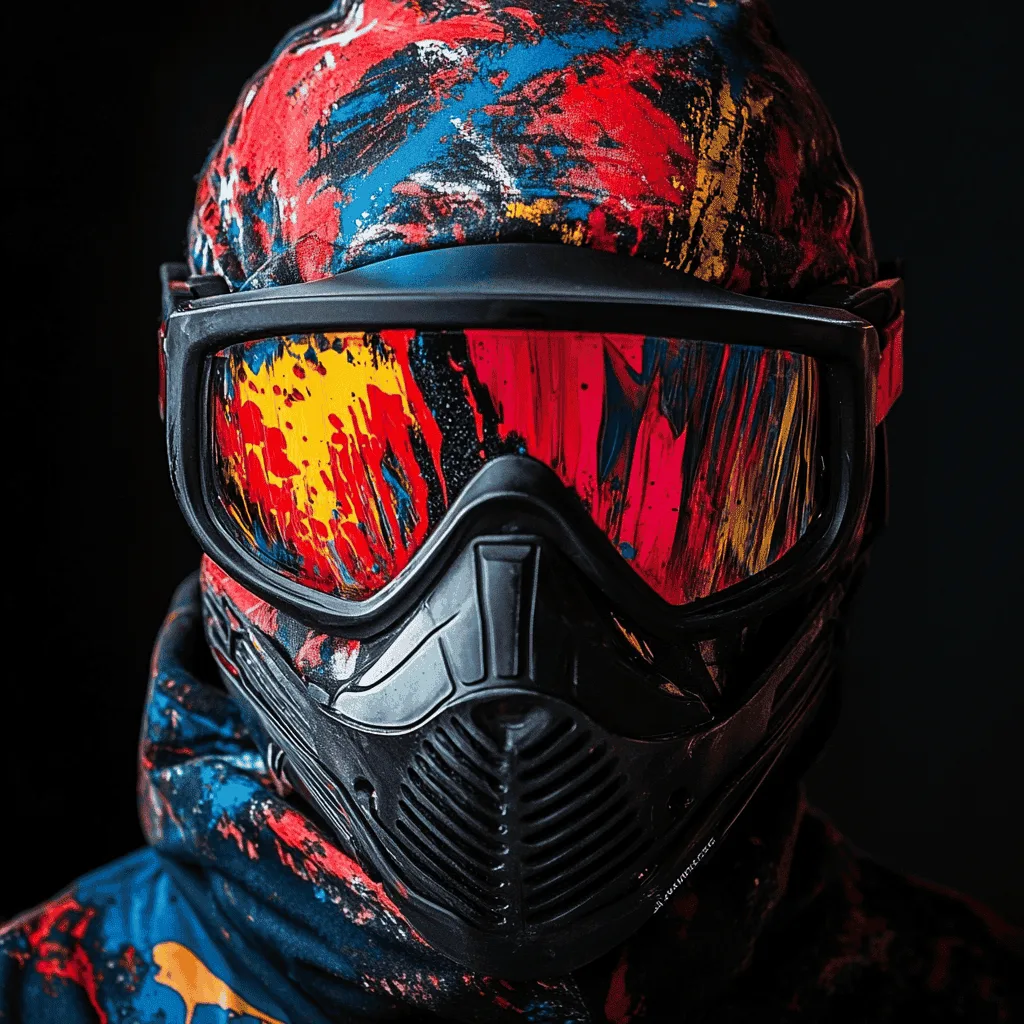
Mask and protective equipment technology evolved rapidly once recreational use created demand for better protection. Early games used basic safety goggles that protected eyes but left faces exposed. Getting hit in the face with a paintball traveling at significant velocity was painful and potentially dangerous.
Full-face masks emerged to address this problem, providing comprehensive facial protection while maintaining the visibility players needed. Early masks were often repurposed from other applications—industrial face shields, motorcycle helmets with modifications, and similar adaptations. Purpose-built paintball masks followed as manufacturers recognized the market opportunity.
The Emergence of Competition
From paintball's earliest days, players wanted to test themselves against others in organized competition. The NSG facilitated this competitive impulse by establishing tournaments and leagues.
The first NSG National Championship took place in 1983, just two years after the initial game. This rapid development of competitive infrastructure demonstrated both the sport's appeal and the organizing capabilities of its early promoters. Players from across the country traveled to compete, establishing paintball as genuinely national rather than regional.
Early tournaments used formats adapted from the original capture-the-flag game, though variations emerged as organizers experimented with different rules and objectives. Elimination games—where the goal was simply to mark all opponents—competed with objective-based formats for popularity.
Team play developed naturally as players discovered that coordinated groups outperformed individuals in most formats. While the first game had been individual competition, subsequent play increasingly emphasized teams. This shift aligned with paintball's emerging identity as a team sport rather than an individual pursuit.
The competitive scene attracted serious players who invested in equipment, practiced regularly, and approached paintball as a sport rather than casual recreation. This dedicated player base provided steady customers for equipment manufacturers and reliable participants for events. They also pushed for equipment improvements that would enable more competitive play.
Franchise Growth and Geographic Expansion
The NSG model involved franchising—licensing the National Survival Game name and operating system to entrepreneurs who established fields in their regions. This approach enabled rapid geographic expansion without requiring central management of every location.
Franchise operators paid fees for the right to use the NSG brand and agreed to follow operational standards. In return, they received access to equipment supply chains, marketing support, and the credibility of an established name. The franchise model enabled NSG to grow faster than direct ownership would have allowed.
By the mid-1980s, NSG fields operated across the United States and had begun appearing internationally. The sport that started in a New Hampshire woodlot had become a genuine phenomenon, with organized play available in major population centers nationwide.
However, the franchise model also created challenges. Quality varied between locations as different operators brought different levels of commitment and capability. The NSG brand could be weakened by poorly run franchises that delivered disappointing experiences. Central oversight of far-flung operations proved difficult.
Eventually, the NSG organizational structure gave way to a more decentralized industry model. Independent fields operated without franchise affiliations, equipment manufacturers sold directly to retailers and consumers, and multiple competing organizations emerged. The NSG era established paintball as viable commercial recreation, even as the specific NSG organization faded in importance.
The 1980s: Paintball's Explosive Growth Decade
The 1980s transformed paintball from novelty activity into established sport. Equipment improved dramatically, participation soared, and paintball developed the culture and infrastructure that would sustain its long-term growth.
The Equipment Revolution
1987 stands as a particularly pivotal year in paintball equipment development. Multiple significant innovations appeared during this period, collectively transforming what had been cottage-industry production into genuine manufacturing.
Barrel blocking devices—plugs and later barrel socks—emerged as standard safety equipment. These devices prevented accidental discharges in staging areas and other non-play zones, addressing a safety concern that had produced incidents at early fields. Making barrel blocking mandatory became a nearly universal policy.
The first paintball grenades appeared, adding tactical options beyond marker fire. These devices exploded on impact, marking anyone within the blast radius. Grenades enabled room-clearing tactics, area denial, and dramatic moments that spectators loved. Various designs emerged, from simple paint-filled balloons to sophisticated manufactured devices.
Marker technology advanced significantly beyond the Nel-Spot platform. New designs fired faster, held more paintballs, and provided better accuracy. Semi-automatic markers that fired with each trigger pull without requiring manual recocking changed gameplay fundamentally. Players could now engage multiple opponents rapidly rather than carefully conserving limited shots.
Pump paintball didn't disappear—some players preferred the skill-based play that pump markers demanded, and pump divisions remain part of paintball today—but semi-automatic markers became the mainstream standard. The volume of fire that semi-automatics enabled created more intense gameplay and higher paintball consumption.
Hoppers evolved from simple gravity-feed designs to motorized systems that actively fed paintballs into markers. Gravity hoppers could struggle to keep up with semi-automatic firing rates, especially during rapid shooting. Motorized hoppers ensured reliable feeding regardless of firing rate.
The Growth of Paintball Fields and Facilities
As participation grew, so did the infrastructure supporting it. Paintball fields proliferated across the United States and internationally, evolving from basic woodland courses to purpose-built facilities with sophisticated playing environments.
Early fields were primarily "woodsball" locations—wooded terrain with natural cover and varied topography. These settings emphasized the survival-game origins of paintball, providing realistic outdoor environments where players could test their skills. Woodsball remains popular today, particularly for scenario games and recreational play.
Concept paintball fields emerged with artificial obstacles and themed environments. Rather than relying on existing terrain, operators built playing environments specifically designed for paintball. Tire stacks, wooden structures, vehicles, and other obstacles created tactical variety that natural terrain alone couldn't provide.
Indoor facilities opened to provide year-round play regardless of weather. These climate-controlled environments attracted players who didn't want seasonal interruptions and enabled paintball in urban areas where outdoor field space was limited or expensive. Indoor facilities typically used artificial bunkers and relatively small playing areas, creating different gameplay than spacious outdoor fields.
The speedball format emerged in purpose-built arenas featuring symmetrical layouts with inflatable bunkers. Unlike woodsball's variable natural terrain, speedball fields provided identical conditions for both teams—a crucial fairness requirement for competitive play. Speedball's fast-paced, exposure-heavy gameplay would eventually dominate tournament competition.
Media Coverage and Cultural Recognition
Paintball's growth attracted increasing media attention throughout the 1980s, spreading awareness and normalizing the sport for mainstream audiences.
Television coverage brought paintball to viewers who had never encountered it otherwise. News programs featured segments on this unusual sport. Sports channels began covering major tournaments. The visual excitement of paintball—colorful impacts, dramatic eliminations, athletic movement—translated well to television.
Magazine coverage expanded beyond the initial Sports Illustrated piece. Dedicated paintball magazines emerged to serve the growing enthusiast community, providing equipment reviews, tournament coverage, tactical advice, and community building. These publications connected players nationally, spreading innovations and building shared culture.
Hollywood discovered paintball as an exciting element for films and television. Action movies incorporated paintball sequences. Sitcoms sent characters paintballing for comedic episodes. This entertainment exposure introduced paintball to audiences who might never have encountered it otherwise.
Corporate interest in paintball for team building emerged during this period. Companies recognized that paintball provided engaging group experiences that encouraged teamwork, communication, and strategic thinking. Corporate bookings became significant revenue sources for many fields.
The Professionalization of Paintball
As the sport matured, professional structures emerged to organize serious competition.
Tournament series developed regional and national circuits that provided competitive opportunities beyond one-off events. Players could build reputations through consistent performance across multiple tournaments. Series championships rewarded sustained excellence rather than single-event luck.
Sponsorship entered paintball as equipment manufacturers recognized the promotional value of supporting successful teams and players. Sponsored players received equipment, sometimes financial support, and represented their sponsors at events. This arrangement prefigured the professional structures that would emerge more fully in subsequent decades.
Standardized rules and formats emerged from the chaos of early competition where every event might operate differently. While complete standardization remained elusive—regional variations persisted and different organizations preferred different approaches—general agreement about fundamental rules enabled meaningful competition across events.
Training and practice became more systematic as competitive players sought advantages. Teams practiced together regularly, analyzing tactics and building the coordination that team sports demand. Individual skills like snap shooting, bunkering, and movement received focused development rather than simple game repetition.
The 1990s: Technological Revolution and Professional Competition
The 1990s brought transformative technological changes and the establishment of genuinely professional competitive structures. Paintball entered the decade as a growing recreational activity and emerged as a legitimate sport with elite-level competition.
The Electronic Marker Revolution
Electronic markers transformed paintball more fundamentally than any previous innovation. These battery-powered devices replaced mechanical trigger mechanisms with electronic solenoids controlled by circuit boards, enabling capabilities impossible with purely mechanical designs.
The most significant capability was rate of fire. Electronic triggers could cycle faster than any human could pull a mechanical trigger. Combined with electronic solenoid operation, electronic markers could fire dramatically faster than their mechanical predecessors. Players equipped with electronic markers could lay down volumes of paint that overwhelmed opponents with older equipment.
Autococker-style markers dominated early competitive play with their precise mechanical operation, but electronic designs quickly proved superior for tournament use. The Shocker, introduced in the mid-1990s, was among the early electronic markers that demonstrated the format's potential. Subsequent designs refined electronic operation into the dominant tournament technology.
Programmable circuit boards enabled shooting modes beyond simple semi-automatic. Burst modes fired multiple shots per trigger pull. Ramping modes increased firing rate as trigger speed increased. Full-automatic modes provided continuous fire with the trigger held. Tournament rules would eventually restrict these capabilities, but their availability changed expectations about what markers could do.
Electronic hoppers matched marker capabilities with feeding systems fast enough to supply high-rate-of-fire markers. Force-feed hoppers actively pushed paintballs into markers rather than relying on gravity. Sound or eye activation detected when markers needed paintballs and fed appropriately.
The electronic revolution created equipment stratification. Players with top-tier electronic markers held significant advantages over those with older mechanical equipment. This gap prompted debates about equipment parity that continue today, with various solutions attempted including equipment-restricted divisions and standardized equipment leagues.
The Rise of Speedball
Speedball became the dominant competitive format during the 1990s, displacing woodsball from serious tournament competition.
The speedball format offered advantages that woodsball couldn't match for organized competition. Symmetrical fields eliminated terrain advantages that could decide woodsball games regardless of team skill. Compact playing areas enabled spectator viewing that spread-out woodland courses prevented. Faster games allowed more matches per event, providing more meaningful competition and better entertainment.
Inflatable bunkers became the standard speedball obstacle. These air-filled structures could be quickly deployed, reconfigured between events, and transported to different locations. Unlike permanent wooden structures, inflatable bunkers enabled standardized course layouts that could be replicated precisely at different venues.
Speedball's exposure-heavy gameplay rewarded different skills than woodsball's cover-focused approach. Players needed explosive sprint speed to reach bunkers off the break. Snap shooting—quickly emerging from cover to fire and disappearing again—became a crucial skill. Aggressive bunkering to eliminate opponents at close range replaced patient woodland stalking.
The physical demands of speedball intensified compared to the more deliberate pace of woodsball. Competitive speedball required athletic conditioning that casual recreational play didn't demand. Players trained physically as well as practicing paintball-specific skills.
Professional Leagues and Major Tournaments
True professional structures emerged as paintball competition matured to the point where the best players could pursue the sport as more than a hobby.
The Paintball Sports Promotions league (PSP) and the National Professional Paintball League (NPPL) became the primary organizing bodies for professional competition in the United States. These leagues established consistent rules, scheduled competitive seasons, and provided the structure that professional sports require.
Prize pools grew to levels that, combined with sponsorship income, enabled some players to focus on paintball full-time. While paintball salaries never matched major traditional sports, the top players could earn meaningful income from the sport. Professional paintball became a viable if challenging career path.
International competition expanded as paintball grew globally. The Millennium Series organized European professional competition, while leagues and tournaments emerged in Asia, Australia, and other regions. World championships brought together top teams from different regions to determine global supremacy.
Major tournaments became significant events with substantial attendance, media coverage, and industry attention. Events like the PSP World Cup attracted thousands of players across divisions and provided showcase opportunities for the sport's elite.
The Safety Evolution
Paintball safety improved dramatically during the 1990s through better equipment, more rigorous standards, and accumulated experience.
Mask technology advanced to provide better protection, improved visibility, and greater comfort. Thermal lenses that resisted fogging became standard on quality masks. Padding and ventilation designs improved comfort during extended wear. Certification standards ensured that masks actually provided adequate protection.
Velocity standards solidified around the 280-300 fps range that balanced playability with safety. Chronograph testing became mandatory at virtually all organized play. Hot guns—markers shooting above velocity limits—faced serious consequences including player ejection.
Field safety protocols became more sophisticated as operators learned from experience. Barrel blocking requirements became universal. Safe zones with clear boundaries separated playing areas from spectator and staging areas. Safety briefings for new players communicated essential rules before anyone took the field.
The insurance industry's participation in paintball provided external safety incentives. Insurance requirements drove safety standards as facilities needed adequate policies to operate. Industry-wide safety improvements reduced incident rates, keeping insurance available and affordable.
According to research tracked by insurance industry analysts, paintball's injury rate compares favorably to many mainstream sports considered far less dangerous by casual perception. This safety record reflects the cumulative impact of decades of safety improvements.
The 2000s and Beyond: Modern Paintball Takes Shape
The new millennium brought continued evolution as paintball matured into the diverse, sophisticated sport familiar to today's players. Multiple formats coexist, professional competition thrives at unprecedented levels, and technological innovation continues transforming the player experience.
The Diversification of Formats
Modern paintball encompasses multiple distinct formats serving different player preferences and competitive structures.
Tournament speedball remains the dominant competitive format, with professional leagues attracting top talent and dedicated followings. The National Xball League (NXL) emerged as the premier professional organization, establishing rules and structures that define elite paintball competition. The race-to format—teams competing to win a specified number of points—provides exciting competition with clear momentum swings.
Woodsball maintained strong recreational following despite losing competitive prominence. For many players, the immersive experience of woodland play provides satisfactions that arena speedball cannot match. Dedicated woodsball players invested in camouflage, tactical gear, and equipment optimized for their preferred format.
Scenario paintball grew into its own subculture with events spanning entire weekends, involving hundreds or thousands of players, and featuring elaborate storylines and mission structures. Major scenario events like Oklahoma D-Day and other large-scale games became pilgrimage destinations for dedicated scenario players.
Pump paintball experienced a renaissance as players sought alternatives to the high-rate-of-fire gameplay that electronic markers enabled. Pump divisions at tournaments provided competitive opportunities for players who preferred skill-intensive single-shot play. The pump community celebrates the precision and deliberation that pump markers demand.
MagFed paintball emerged using markers that feed from magazines rather than hoppers. These markers often resemble real firearms more closely than traditional paintball markers, appealing to players seeking realistic military simulation experiences. MagFed divisions and events serve this growing community.
Low-impact paintball opened the sport to younger players and those concerned about standard paintball's intensity. Using smaller projectiles at lower velocities, low-impact formats provide genuine paintball experiences with reduced sting. Many facilities offer low-impact programs specifically for families and beginners.
Equipment Sophistication
Modern paintball equipment would astonish early players accustomed to Nel-Spot limitations.
Tournament-grade markers feature extraordinary engineering. Precision machining creates components with extremely tight tolerances. Sophisticated electronics provide programmable firing modes, diagnostic capabilities, and even wireless connectivity for setup and monitoring. Multiple regulator stages provide consistent air pressure shot after shot.
Efficiency improvements enable far more shots per tank fill than early equipment could imagine. Players in full-day events might not need to refill tanks that would have lasted minutes with original equipment. This efficiency reduces operating costs and eliminates air supply as a tactical concern.
Paint quality improved dramatically with consistent sizing, round shape, and reliable breaking. High-end tournament paint is engineered to strict specifications that enable accuracy impossible with variable-quality paint. The difference between premium and budget paint is immediately apparent in gameplay.
Protective equipment evolved beyond basic masks to include comprehensive gear systems. Padded jerseys and pants protect against impacts while allowing athletic movement. Harness systems carry paint pods efficiently. Gloves, arm pads, and other accessories provide targeted protection without bulk.
The Business of Modern Paintball
Paintball operates as a multi-billion-dollar global industry supporting equipment manufacturers, field operators, event organizers, and related businesses.
Major equipment manufacturers including Planet Eclipse, Dye, Empire, and others compete for market share with continuous innovation. These companies invest significantly in research and development, sponsoring professional teams, and marketing to attract players to their product ecosystems.
Field operations range from small independent venues to large commercial operations with multiple fields, pro shops, and event hosting capabilities. The field business requires substantial investment in property, equipment, and staffing while facing seasonal and economic variability.
Tournament and event businesses organize competitions at every level from local grassroots events to professional championships. Event organizers manage logistics, marketing, rule enforcement, and the countless details that successful events require.
Supporting businesses including paintball media, coaching services, and specialty retailers serve the player community. Dedicated paintball publications, websites, and social media presences provide information and community building. Coaches work with teams seeking competitive improvement. Specialty retailers offer expertise beyond general sporting goods stores.
Professional Paintball Today
Professional paintball reached unprecedented sophistication, though it remains smaller than mainstream professional sports.
The NXL represents professional paintball's apex in the United States, organizing events that attract the world's best teams. NXL events feature intense competition, sophisticated broadcast production, and substantial attendance. The league provides meaningful structure for elite competition while working to grow paintball's mainstream profile.
International professional leagues including the Millennium Series in Europe provide similar competitive structures in other regions. World championships and international events enable global competition that determines the sport's true elite.
Professional players today combine athletic talent with specialized paintball skills developed through years of dedicated practice. While few can support themselves entirely through paintball income, the top professionals earn meaningful compensation from combination of prize money, sponsorships, and related opportunities.
Media coverage of professional paintball expanded significantly with dedicated broadcast production and streaming. Fans can follow professional competition through official channels and increasingly sophisticated presentation. While paintball hasn't achieved mainstream sports media prominence, coverage quality has improved dramatically.
The Cultural Legacy and Ongoing Evolution
Beyond its business dimensions, paintball developed a distinctive culture that shapes player experiences and community identity.
The Community Aspect
Paintball fosters strong community bonds that often become as important to players as the gameplay itself. Teams become tight-knit social groups. Field regulars develop friendships across competitive divisions. The paintball community provides belonging and identity for many participants.
Online communities extended these connections beyond local groups. Forums, social media groups, and discussion platforms connect paintball players globally, sharing knowledge, debating equipment, and building relationships across geographic distances. The PbNation forums and similar communities have served paintball players for decades.
Veterans of the sport actively mentor newcomers, passing on knowledge and integrating new players into community culture. This mentorship tradition helps explain paintball's strong safety record—experienced players teach safety consciousness alongside tactical skills.
The competitive community develops its own celebrities—players whose skills, personalities, or contributions earn widespread recognition. Following top players and teams provides engagement similar to traditional sports fandom.
Values and Ethics
Paintball culture emphasizes certain values that shape how the game is played and how participants interact.
Honesty and integrity occupy central positions in paintball ethics. Calling your own hits, playing fairly, and acknowledging when opponents succeed reflects values the community reinforces. Cheating—particularly wiping hits—faces serious social sanction beyond any formal penalties.
Sportsmanship expectations influence behavior even in intense competitive situations. Shaking hands after matches, congratulating good plays by opponents, and maintaining respect despite competitive stakes reflect cultural expectations rather than simply rule requirements.
Safety consciousness pervades paintball culture beyond official rule compliance. Players watch out for each other, reporting unsafe conditions and helping ensure everyone follows safety requirements. This collective responsibility contributes to the sport's excellent safety record.
Respect for equipment, facilities, and the game itself characterizes good paintball citizenship. Maintaining gear properly, leaving fields in good condition, and supporting the industry that enables the sport reflect values the community celebrates.
Ongoing Challenges and Evolution
Paintball faces ongoing challenges that the community and industry continue addressing.
Player recruitment and retention remain constant concerns. Attracting new players to try paintball and converting first-time participants into regular players determines the sport's long-term health. Entry barriers including equipment cost, intimidation about pain, and simple unfamiliarity with the sport create obstacles.
Low-impact programs address some entry barriers but create their own challenges regarding transition to standard paintball. Indoor facilities and walk-on programs improve accessibility. Better introductory experiences ease new players into the sport.
Cost pressures affect participation rates across all formats. Equipment purchases, field fees, paint costs, and travel expenses for competitive players add up significantly. Economic accessibility concerns influence industry decisions about pricing and program design.
Environmental considerations receive increasing attention. Biodegradable paintballs and environmentally conscious operations address sustainability concerns. Facilities on sensitive land manage their environmental impact carefully.
Mainstream acceptance remains an ongoing project. While paintball has achieved significant recognition, some mainstream audiences still hold misconceptions about the sport. Education and positive exposure continue working to normalize paintball as legitimate recreation and sport.
Looking Forward: Paintball's Future
Predicting paintball's future involves considerable uncertainty, but current trends suggest possible directions.
Technological Trajectories
Equipment technology continues advancing, though perhaps at a slower pace than during the revolutionary 1990s.
Electronic marker refinement continues with incremental improvements in efficiency, reliability, and features. Smart technology integration may provide data analysis, performance tracking, and connectivity features. Whether these advances enhance or complicate the game remains to be seen.
Paint technology improvements focus on consistency, environmental impact, and performance across conditions. Perfectly round, consistently sized paintballs that break reliably on any target remain aspirational goals that manufacturers pursue.
Protective equipment advances may reduce the discomfort barrier that discourages some potential players. Impact-absorbing materials could make hits less painful without compromising gameplay.
Competitive Evolution
Competitive paintball's format and structure will likely continue evolving in response to player preferences, broadcast requirements, and organizational capabilities.
Media presentation improvements may help paintball reach broader audiences. Better broadcast production, clearer presentation of complex gameplay, and more effective storytelling could attract viewers unfamiliar with the sport.
Format innovations may create new competitive structures alongside established speedball and woodsball traditions. Hybrid formats, new objective types, and creative rule sets provide endless possibilities for competitive innovation.
Professionalization may deepen if paintball continues growing and attracting investment. More stable team structures, better player compensation, and more sophisticated league operations could establish paintball more firmly as professional sport.
Recreational Trajectories
The recreational player base that constitutes paintball's foundation will likely remain central to the sport's future.
Accessibility improvements through lower-cost equipment, more convenient facilities, and better introductory programs may expand recreational participation. Making paintball easier to try for first-time players addresses recruitment challenges.
Format diversity will likely continue serving different player preferences. Rather than converging on single dominant formats, paintball may maintain its current diversity of speedball, woodsball, scenario, pump, and other traditions.
Experiential enhancements may make paintball more engaging beyond pure gameplay. Immersive scenario design, technology augmentation, and creative event formats provide differentiation from simple elimination games.
Conclusion
From Charles Nelson's tree-marking solution to the global sport played by millions today, paintball's history traces an unlikely but fascinating journey. The practical device that foresters used to mark timber and ranchers used to identify cattle became the foundation for competitive sport, recreational activity, and cultural phenomenon.
The 1981 game that Charles Gaines, Hayes Noel, and Bob Gurnsey organized as a survival skills experiment sparked a transformation that none could have fully anticipated. Ritchie White's stealthy victory without firing a shot established that paintball rewarded strategy as well as marksmanship. The subsequent decades saw equipment evolve from primitive pump markers to sophisticated electronic systems, playing formats multiply from simple capture-the-flag to diverse competitive and recreational variants, and paintball culture develop its own values, traditions, and community.
Today's paintball inherits all this history even as it continues evolving. The terminology that calls guns "markers" traces to forestry origins. The emphasis on safety reflects hard lessons learned over decades. The diversity of formats serves preferences ranging from high-speed tournament competition to patient woodland stalking to elaborate scenario adventures.
Understanding this history enriches participation in a sport that continues providing unique experiences unavailable anywhere else. The combination of physical challenge, strategic thinking, team coordination, and pure competitive excitement that paintball offers emerged from improbable origins but has proven remarkably durable. Whatever future developments the sport experiences will build on foundations established across more than sixty years of paintball history.
The next time you pull on a mask and step onto a paintball field, you're participating in something that connects back through those decades to a New Hampshire woodland where twelve players with primitive equipment discovered something worth preserving and developing. That connection to history makes every game part of paintball's ongoing story.
